Support
What is solid-phase peptide synthesis?
A method that builds a peptide one amino acid at a time on an insoluble resin support. Each residue is coupled, excess reagent is washed away, and the finished chain is cleaved from the resin and purified — usually by reversed-phase HPLC.
Anchoring the growing chain to a solid support is what makes the method practical: after each coupling step the excess reagents are simply washed off, instead of requiring a purification at every stage.
The chain is assembled from the C-terminus toward the N-terminus. Each residue arrives with its reactive side chains protected, is coupled, and then has its temporary N-terminal protection removed before the next residue is added. Cleavage from the resin at the end also removes the side-chain protection.
The impurity profile on a certificate is a record of where that process was imperfect: deletion sequences from an incomplete coupling, truncated chains, species where a protecting group survived. Reversed-phase HPLC separates those from the target, which is why purity and synthesis route are related questions.
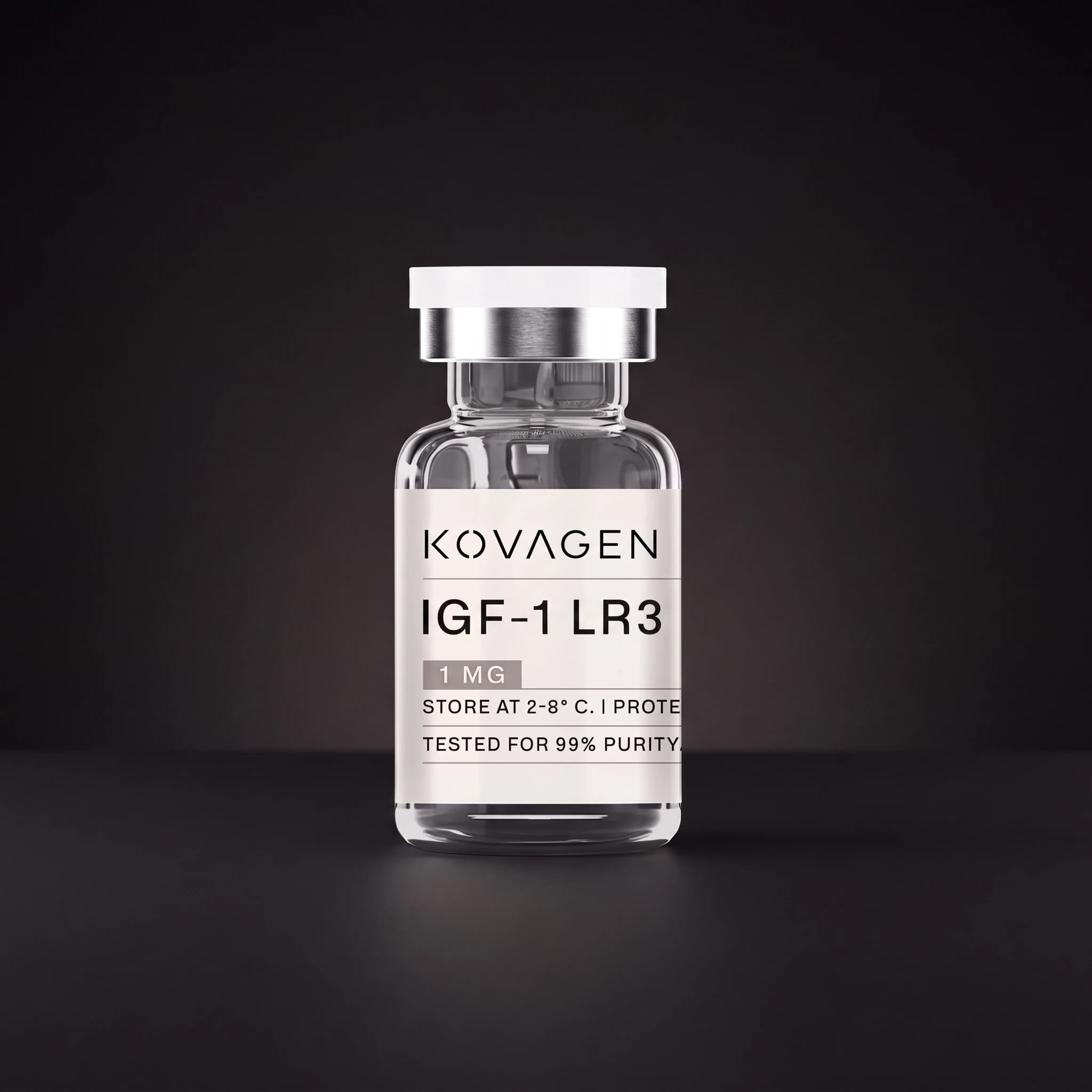
Not everything is made this way. IGF-1 LR3 is a recombinant protein expressed in a biological system rather than assembled synthetically.
Why chain length drives difficulty and cost
Yield compounds multiplicatively across couplings, and that arithmetic governs everything about which peptides are straightforward to make. At 99% efficiency per coupling, a 10-residue peptide finishes at about 90% theoretical yield; a 30-residue peptide at the same per-step efficiency finishes near 74%. The remainder is not lost material so much as a growing population of closely related wrong sequences that then have to be separated from the target.
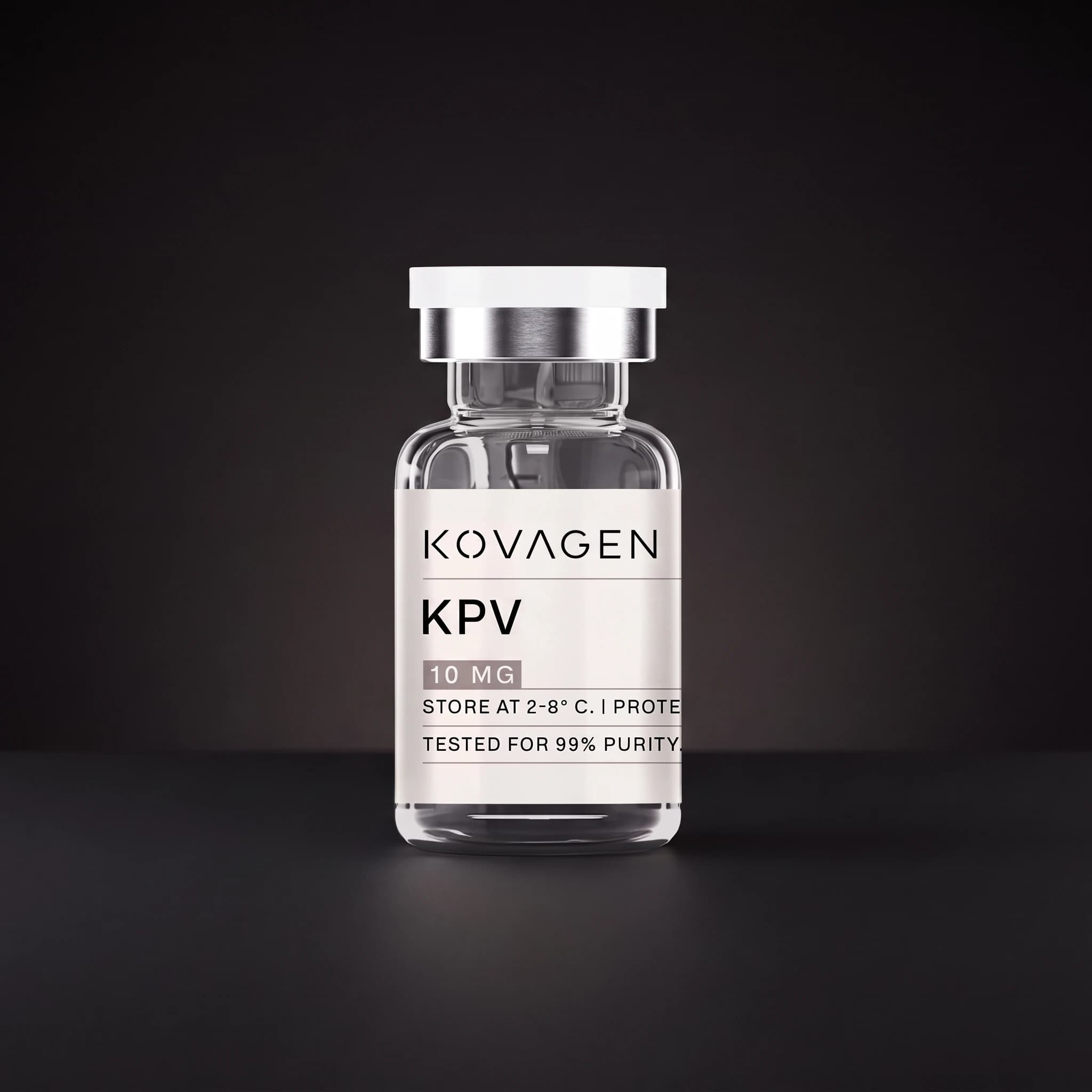
This is why a short sequence such as KPV, at three residues, is a fundamentally easier proposition than a 30-residue analog like tesamorelin, and why the difficulty is not proportional to length but steeper than that. Certain sequences also aggregate on the resin as they grow, making couplings progressively less efficient in a way that is specific to the sequence rather than general.
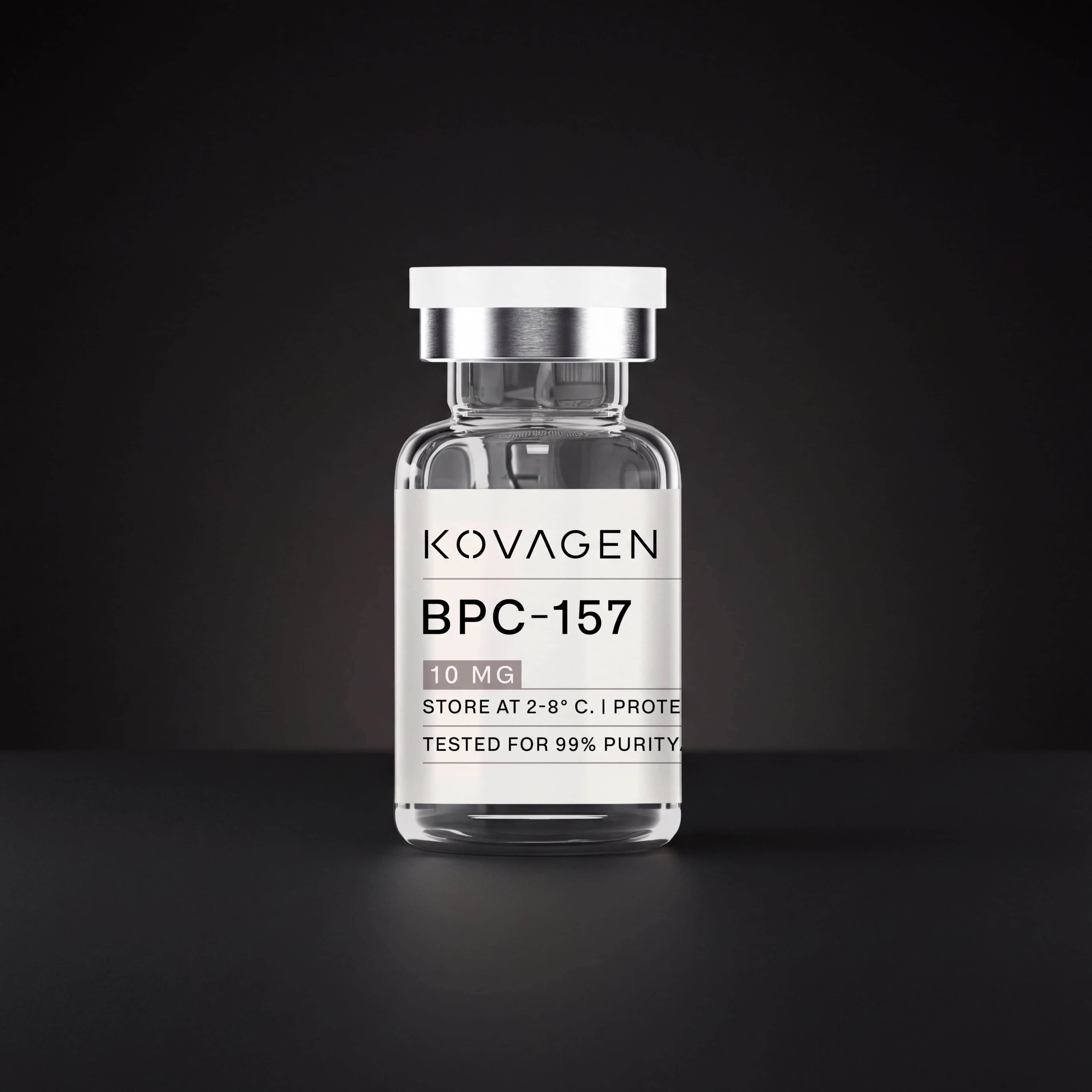
It also explains why price across a peptide catalogue tracks synthetic difficulty rather than anything about the compound's interest or scarcity. And it is the reason recombinant expression is used for larger proteins: past a certain length, stepwise chemical assembly stops being the more sensible route.
From the catalog
Compounds referenced on this page
For laboratory research use only. Not for human or veterinary consumption.