Handling
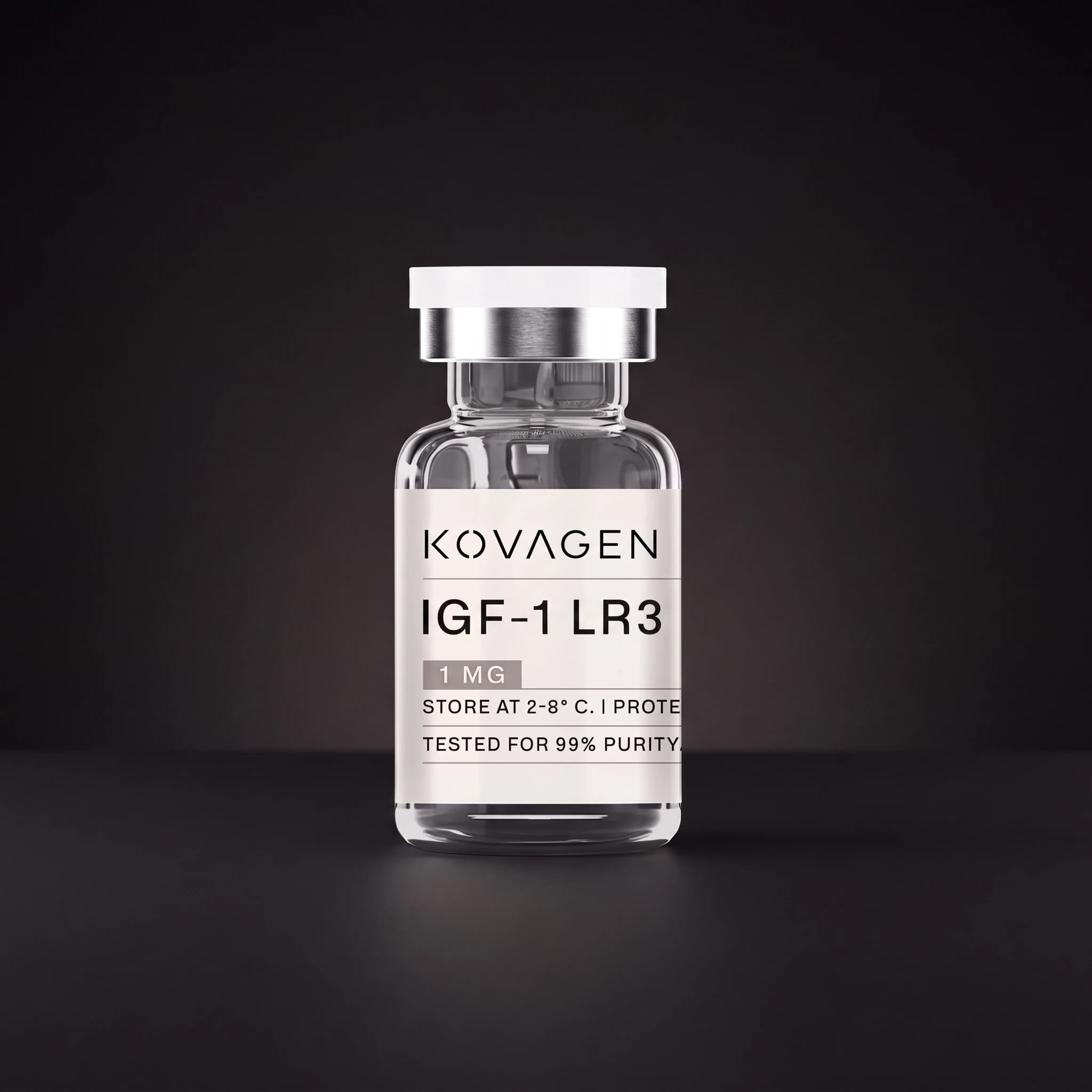
Handling and storing IGF-1 LR3
This is the only recombinant protein in the catalogue, and proteins are less forgiving than short synthetic peptides. This page covers sealed, desiccated lyophilized powder only: how it is stored, what to inspect, and which certificate results to read. It contains no reconstitution, dosing or administration guidance for any human or animal use.
Why a protein is handled more carefully
A short synthetic peptide has essentially no tertiary structure to lose. A 70-plus residue protein stabilised by internal disulfide bonds does: it has a folded conformation, and conformation can be disturbed by heat, by mechanical stress and by repeated temperature cycling in ways that a tripeptide cannot experience.
Lyophilization protects that structure well — a dry solid has very little conformational freedom — which is precisely why the material ships as a dry solid. The care applies to keeping it one.
Aggregation is the failure mode to know about
The characteristic degradation route for a protein is aggregation: individual molecules associating into dimers and larger species. Aggregates are a distinct impurity class, they are not detected by a reversed-phase purity method, and they are not reversible.
Repeated warming and cooling is the handling pattern most associated with it. A vial taken in and out of cold storage several times has been through more thermal cycles than one that was stored once and used once.
The fill weight is small, and that matters
IGF-1 LR3 is supplied at 1 mg, the smallest fill in the catalogue. A milligram of lyophilized protein is a very small quantity of solid and may present as a thin film or a barely visible deposit rather than a recognisable cake.
That appearance is normal at this fill weight and is not evidence of a problem. The certificate remains the document of record.
What this page does not cover
Reconstitution. We do not provide dosing, administration or reconstitution guidance for human or animal use, in any channel — that is a fixed boundary rather than an omission. Everything above concerns sealed, unopened lyophilized material, which is a question we can answer.
Handling, step by step
- Keep the vial sealed and desiccated. Leave the stopper, crimp and desiccant undisturbed. A dry solid is the state in which the folded structure is most stable.
- Store at the temperature on the certificate, and cycle it as little as possible. Storage conditions are stated per batch on that batch's certificate. Minimising the number of times a vial is warmed and re-cooled matters more for a protein than for a short peptide.
- Avoid mechanical stress. Do not shake or drop the vial. Mechanical stress is an established contributor to protein aggregation in a way it is not for small peptides.
- Read the size-exclusion and endotoxin results. On the certificate, look for what a reversed-phase purity figure cannot report: aggregate content by size exclusion, and endotoxin, which is relevant here because expression is biological.
- Expect a small deposit. At a 1 mg fill the lyophilized solid may be a thin film rather than a visible cake. This is a consequence of the quantity, not a defect.
From the catalog
Compounds referenced on this page
For laboratory research use only. Not for human or veterinary consumption.