Research guide
Peptide testing methods and what they establish
Peptide identity, HPLC purity, net peptide content and contaminant screening answer different questions. Read each reported result with its method, units, limits and sample identity. One result cannot substitute for the others, and no analytical panel establishes suitability for human or veterinary use.
Choose evidence for the analytical question
Retention-time matching and mass spectrometry
HPLC retention-time matching compares a sample peak with a reference under the chosen chromatographic conditions. Mass spectrometry measures mass-to-charge information and can provide a different form of identity evidence. Read the laboratory’s actual identification procedure; do not summarize all identity testing as mass spectrometry or assume a matching mass proves a complete sequence.
Peak area, content and uncertainty
A chromatographic purity result depends on detection and integration. Ask what peaks were included, which wavelength or detector was used, and whether non-peptide species were excluded. Quantitation is a separate analytical question. Validation and measurement uncertainty determine how the result should be interpreted, not the number of decimal places alone.
Screening has a defined scope
Heavy-metal, residual-solvent, endotoxin and other assays use different methods and limits. Not detected is a method-dependent statement rather than a claim of absolute absence. A Pass reflects the criterion on that report. Where a result is marked Reported, preserve that distinction instead of converting it into a pass.
Blends need component-level context
An overall blend total and a composition label do not prove that every component was individually quantified. Read whether component quantities were measured or calculated from a stated ratio. Treat any reported replicate or conformity values as sample-level observations, with the laboratory’s grouping and statistical basis retained.
Use the original sources
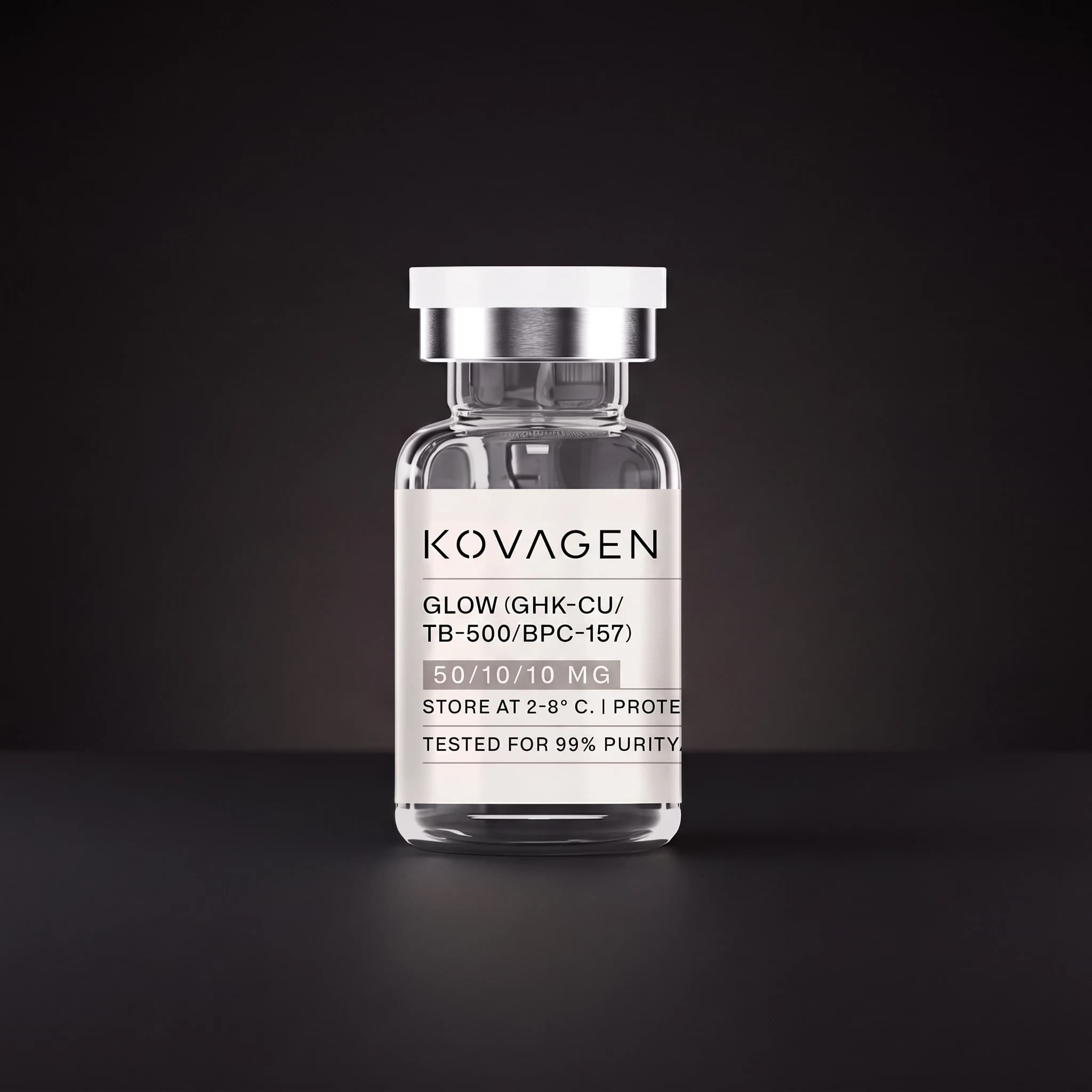
Match the vial’s lot to its certificate, then compare the seller’s summary with the issued PDF or laboratory-controlled page. Resolve disagreements with the issuer before relying on affected fields. These checks support a laboratory purchasing decision; they do not validate a clinical use.
References
- ICH Q6B: Specifications — Test Procedures and Acceptance Criteria for Biotechnological/Biological Products — International Council for Harmonisation (ICH)
- ICH Q2(R2): Validation of Analytical Procedures — International Council for Harmonisation (ICH), 2023
- Related impurities in peptide medicines — D'Hondt M et al., Journal of Pharmaceutical and Biomedical Analysis, 2014
From the catalog
Compounds referenced on this page
For laboratory research use only. Not for human or veterinary consumption.