Handling
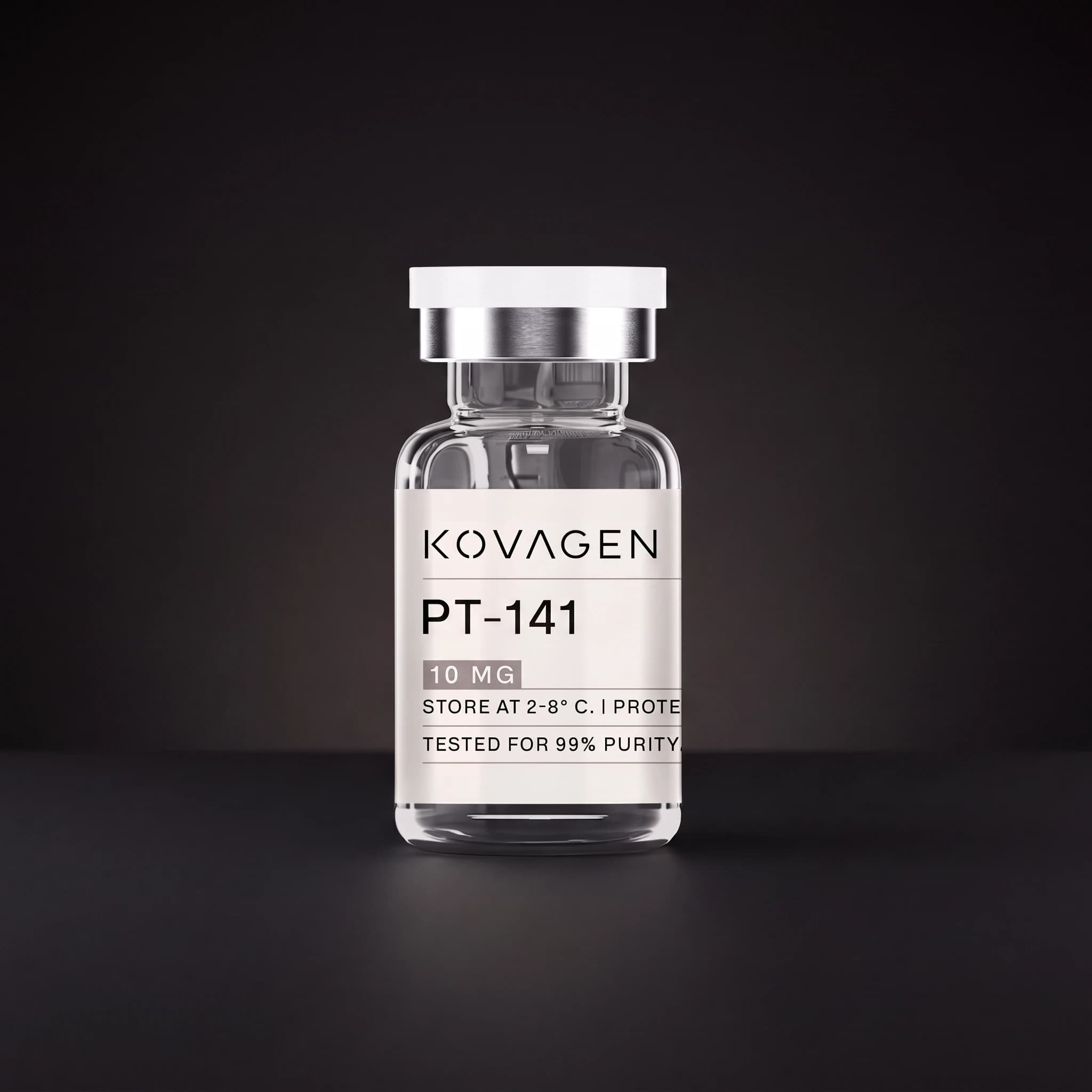
Handling and storing PT-141
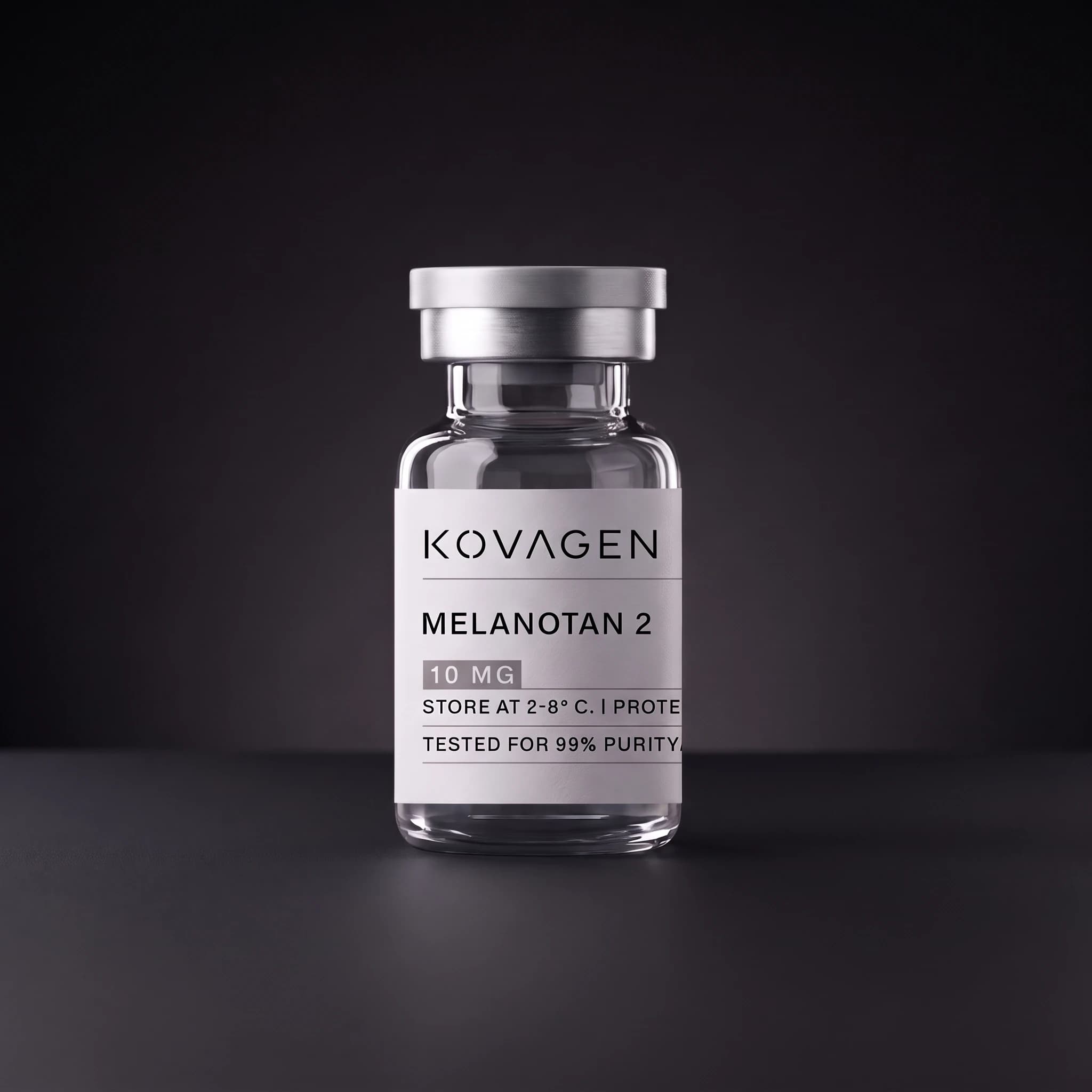
PT-141 shares a cyclic scaffold with melanotan II and differs from it only slightly, which makes batch identification more than a formality. This page covers sealed, desiccated lyophilized powder only: how it is stored, what to inspect, and which certificate results to read. It contains no reconstitution, dosing or administration guidance for any human or animal use.
Why the batch number matters more for this compound
PT-141 and melanotan II are closely related cyclic heptapeptides separated by a small structural difference at the C-terminus. Two vials of white lyophilized powder are indistinguishable by eye, and the compounds are frequently confused in this category.
The batch number on the label, and the identity result on the certificate it retrieves, are what establish which compound is in front of you. That is a good general practice; here it is the specific safeguard against a genuinely common mix-up.
Cyclic structure and what it does and does not protect
The ring closure restricts backbone flexibility, which makes the molecule a poorer substrate for proteases than an equivalent linear peptide. It contributes real stability.
It offers nothing against the pathways that actually threaten lyophilized powder in storage: moisture uptake, elevated temperature and light. Those are addressed by the seal, the desiccant and the carton.
Light protection, and why it is specific rather than general
Like melanotan II, this sequence contains tryptophan, which absorbs ultraviolet light and can degrade photochemically. Keeping the vial in its carton is therefore a measure aimed at a real pathway for this compound, not a precaution applied uniformly across the catalogue — for a peptide with no photolabile residues, light is a minor consideration.
The threshold is undemanding. Brief handling under laboratory lighting is not the concern; leaving a vial exposed on a bench over days is. Returning it to the carton after use covers the case entirely.
One further note on inventory
Because PT-141 and melanotan II are visually identical as lyophilized powder and differ by a small structural change, the practical safeguard is record-keeping rather than inspection. Recording the batch number against your own inventory at the point of receipt means the identity of a vial does not later depend on which shelf it was placed on.
This matters more than it would for a pair of unrelated compounds. If the two were confused, no visual check would reveal it, and the only route back to certainty is the batch number and the certificate it retrieves.
Net peptide content is also worth recording from the certificate at the same time, since it differs between batches and is the figure any concentration calculation should start from rather than the fill weight on the label.
What this page does not cover
Reconstitution. We do not provide dosing, administration or reconstitution guidance for human or animal use, in any channel — that is a fixed boundary rather than an omission. Everything above concerns sealed, unopened lyophilized material, which is a question we can answer.
Handling, step by step
- Keep the vial sealed and desiccated. Leave the stopper and crimp undisturbed and the desiccant in place. Lyophilized powder is hygroscopic regardless of the molecule's topology.
- Store at the temperature stated on the certificate. Conditions are stated per batch and apply to an unopened vial.
- Verify the batch number against the certificate on receipt. Confirm that the compound named on the certificate is the compound you ordered. Given how similar this molecule is to melanotan II, this check has real value.
- Keep it in its carton. Light protection is a sensible default for a peptide containing aromatic residues.
From the catalog
Compounds referenced on this page
For laboratory research use only. Not for human or veterinary consumption.