Support
What is lyophilized powder?
Lyophilized means freeze-dried. The material was frozen and its water removed by sublimation under vacuum, leaving a dry solid. Removing the water removes what most degradation pathways need, which is why the powder is stable in transit.
Every compound in this catalogue is supplied as lyophilized powder in a sealed, desiccated vial. Freeze-drying avoids ever concentrating the peptide through a warm liquid phase, which is where aggregation and hydrolysis happen fastest.
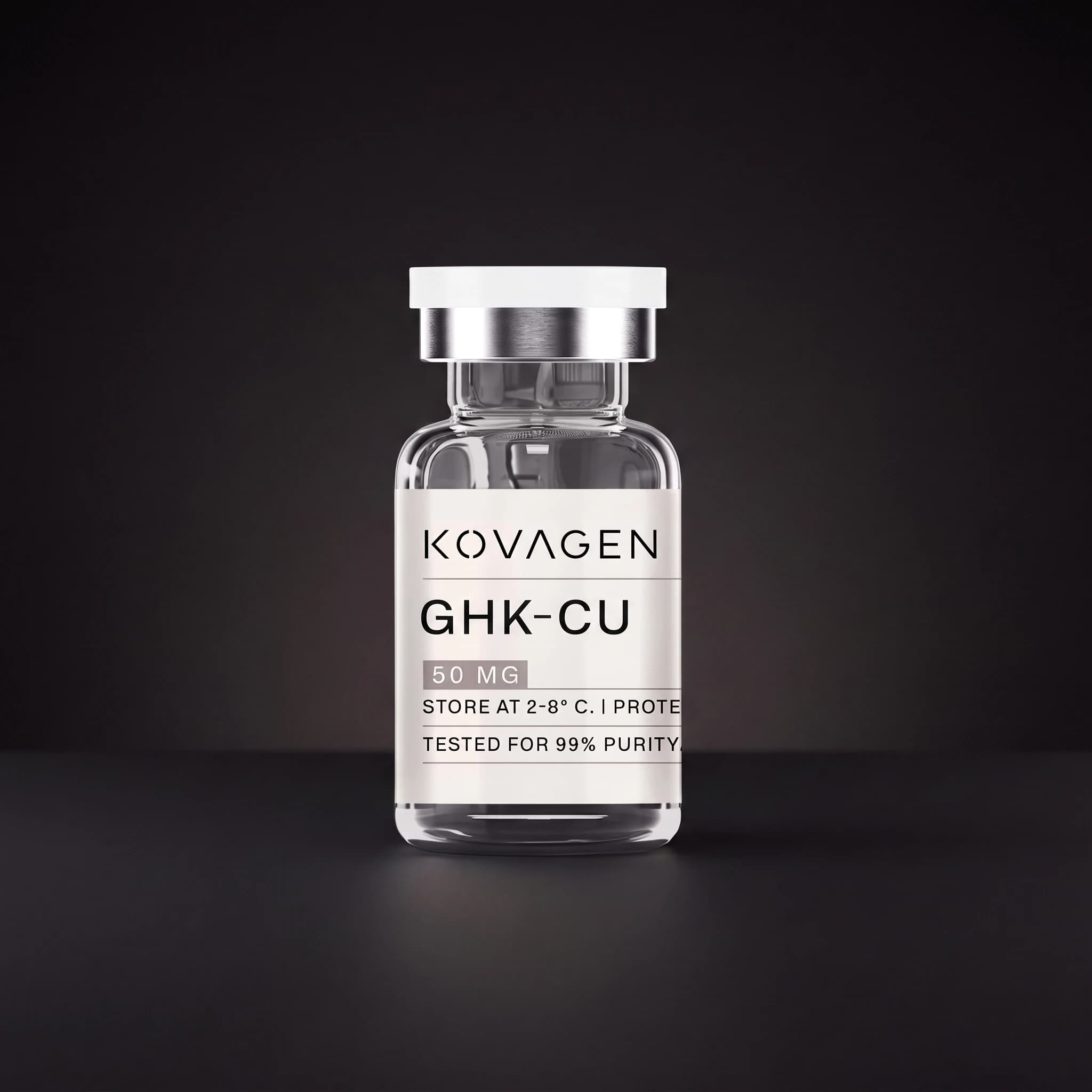
The visible result is either a coherent porous cake occupying part of the vial or a looser powder. Both are normal. Some compounds are characteristically coloured — GHK-Cu carries a coordinated copper ion and is blue.
One consequence worth knowing: the dry solid is peptide plus residual water plus counter-ions from purification, so the label weight is not the same as the mass of peptide present. That figure is the net peptide content, reported separately on the certificate.
Why the cake looks different between vials
The appearance of a lyophilized cake is determined by how the material froze and how the drying cycle ran, not by how pure it is. A cake that has partly collapsed, sits as a thin film on the vial wall, or has come loose and moves as a plug is still the same material at the same purity.
Volume is similarly uninformative. Freeze-drying leaves an open, porous solid, so a few milligrams can appear as a substantial cake or as a barely visible film depending on the fill volume and the geometry of the vial. A vial that looks empty at a glance frequently is not — the solid is there, spread thinly.
What is worth examining on receipt is the seal, the crimp and the desiccant, because those are what keep the powder dry. Cake appearance is cosmetic; an intact seal is not.
From the catalog
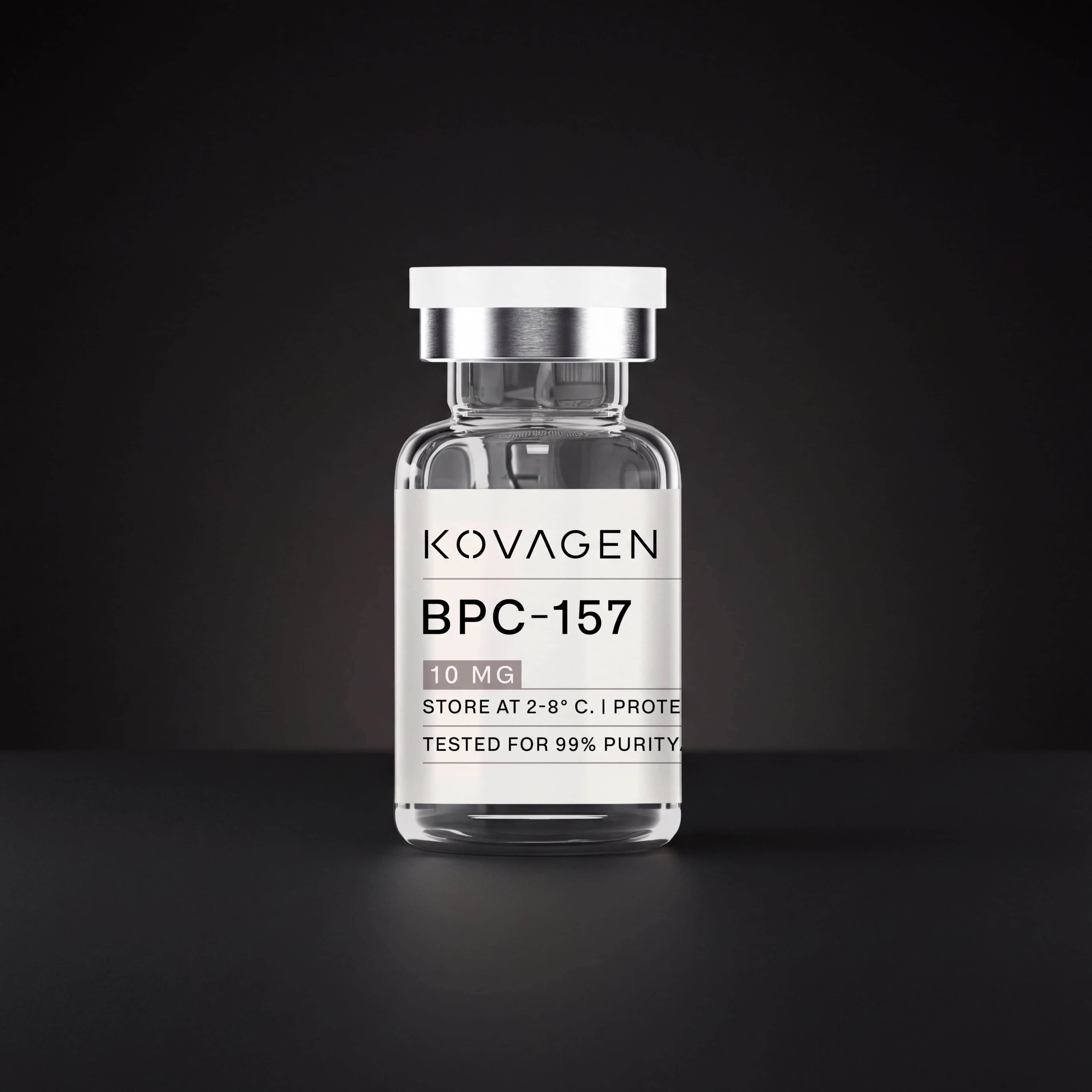
Compounds referenced on this page
For laboratory research use only. Not for human or veterinary consumption.