Support
What does desiccated mean?
That the vial contains a drying agent keeping its internal air dry. Lyophilized powder is hygroscopic — it pulls water out of humid air — so the desiccant preserves the dryness that freeze-drying achieved.
Freeze-drying removes the water that most degradation pathways require. That benefit only lasts as long as the powder stays dry, and a vial's headspace is where moisture would come from.
So the desiccant is functional rather than packaging. It stays in the vial, and its presence is one of the things worth checking on receipt alongside an intact stopper and crimp.
Material is held sealed and desiccated from release through dispatch.
Why hygroscopic powder is a real problem, not a theoretical one
A freeze-dried peptide has an enormous surface area relative to its mass — that is what the porous cake structure is — and it was produced by removing water from a system that thermodynamically prefers to hold some. Left in humid air it will reabsorb moisture measurably within hours, not months. The powder does not need to look wet for enough water to be present to enable hydrolysis and deamidation.
Once water is present, degradation is no longer paused. The stability that lets sealed lyophilized material travel at ambient temperature is a property of the dry state specifically, not of the compound, so it is lost as soon as the dry state is.
This is why the desiccant is not the same kind of object as the packaging around it. Discarding the sachet, or leaving the vial open on a bench while working, removes a protection that the retest date on the certificate assumed was in place.
From the catalog
Compounds referenced on this page
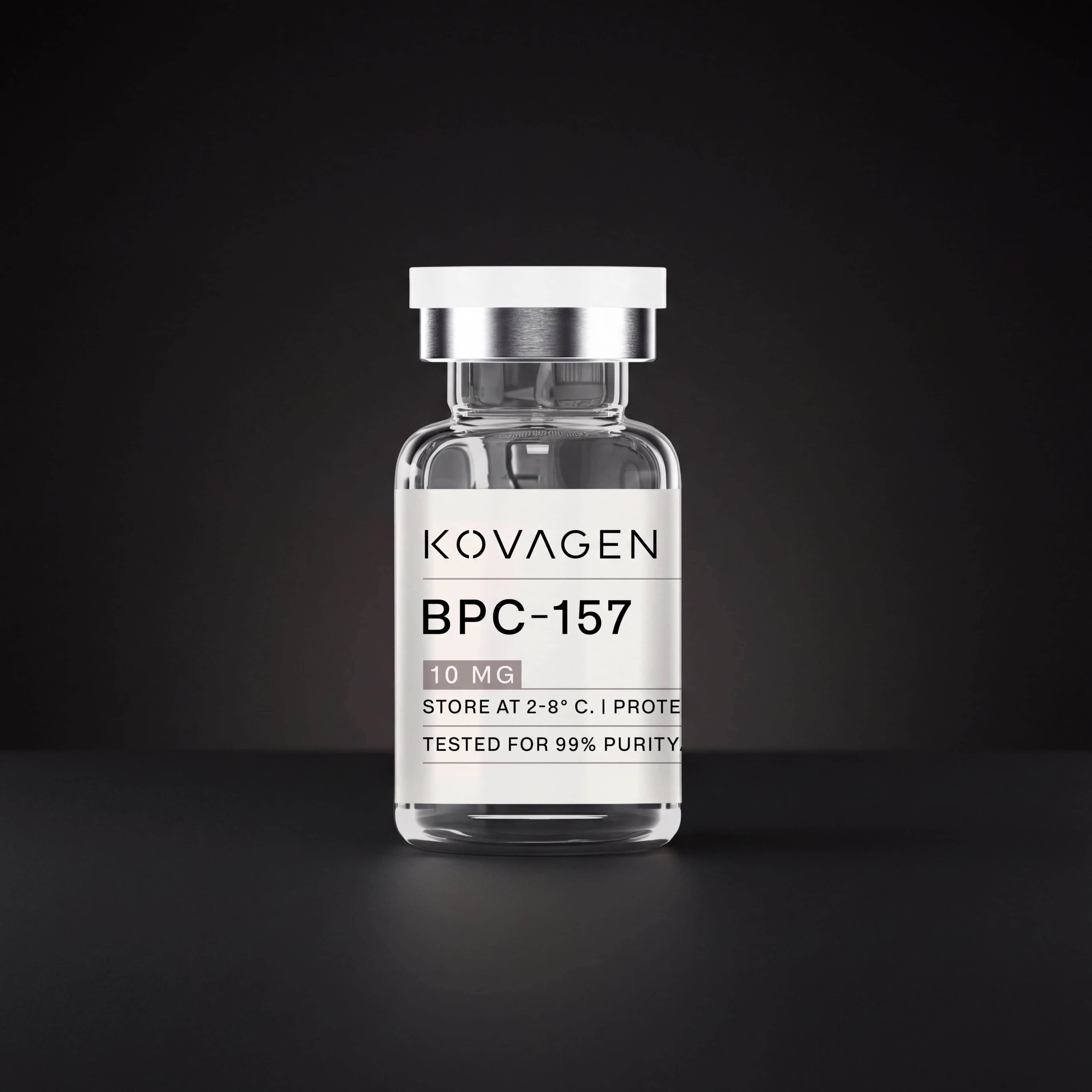
For laboratory research use only. Not for human or veterinary consumption.