Collection
Growth hormone secretagogues and GHRH analogs
What groups these compounds
This is a grouping by molecular class, not by application. Growth hormone-releasing hormone is a 44-amino-acid peptide, and its first 29 residues carry the activity — which is why several compounds here are built on the 1-29 fragment.
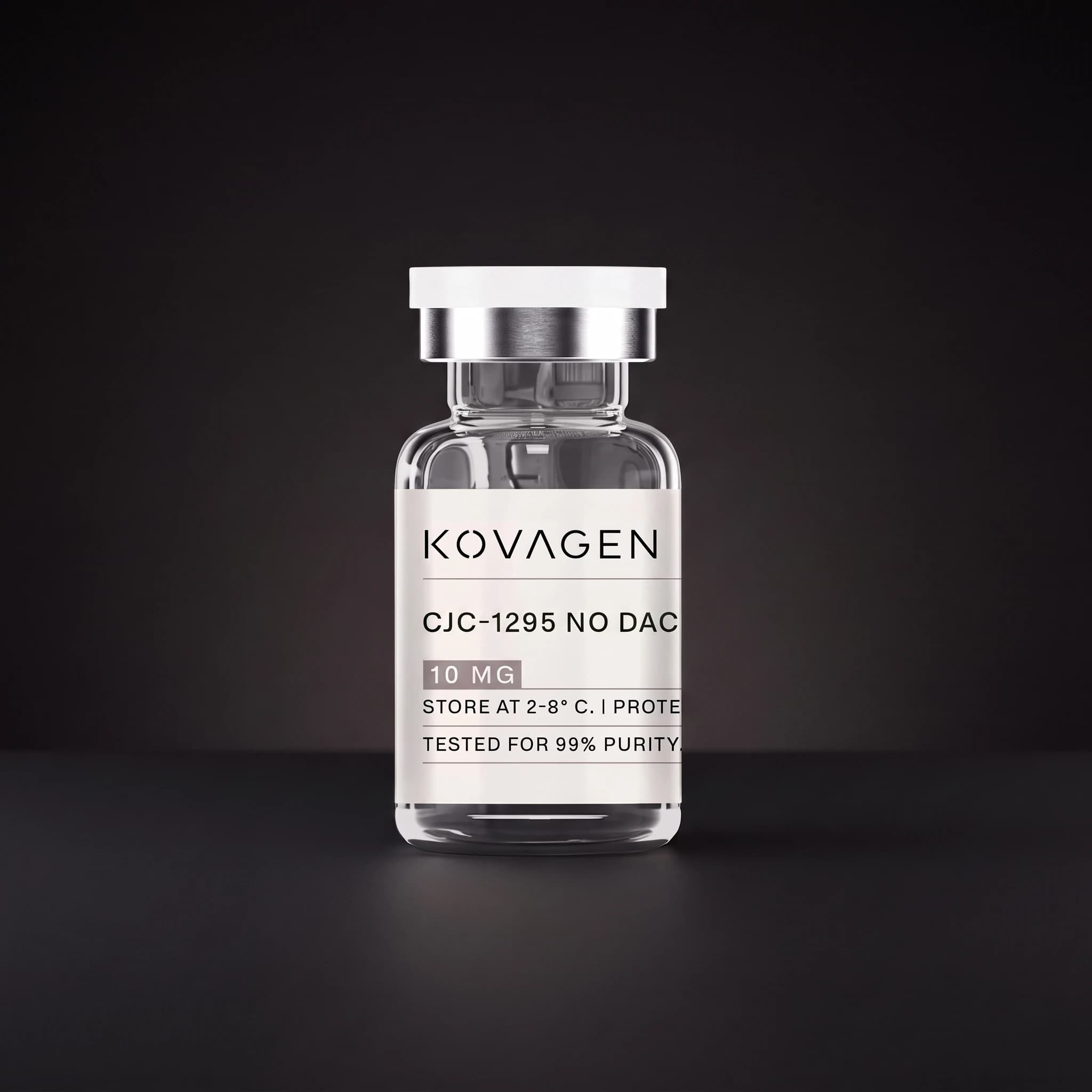
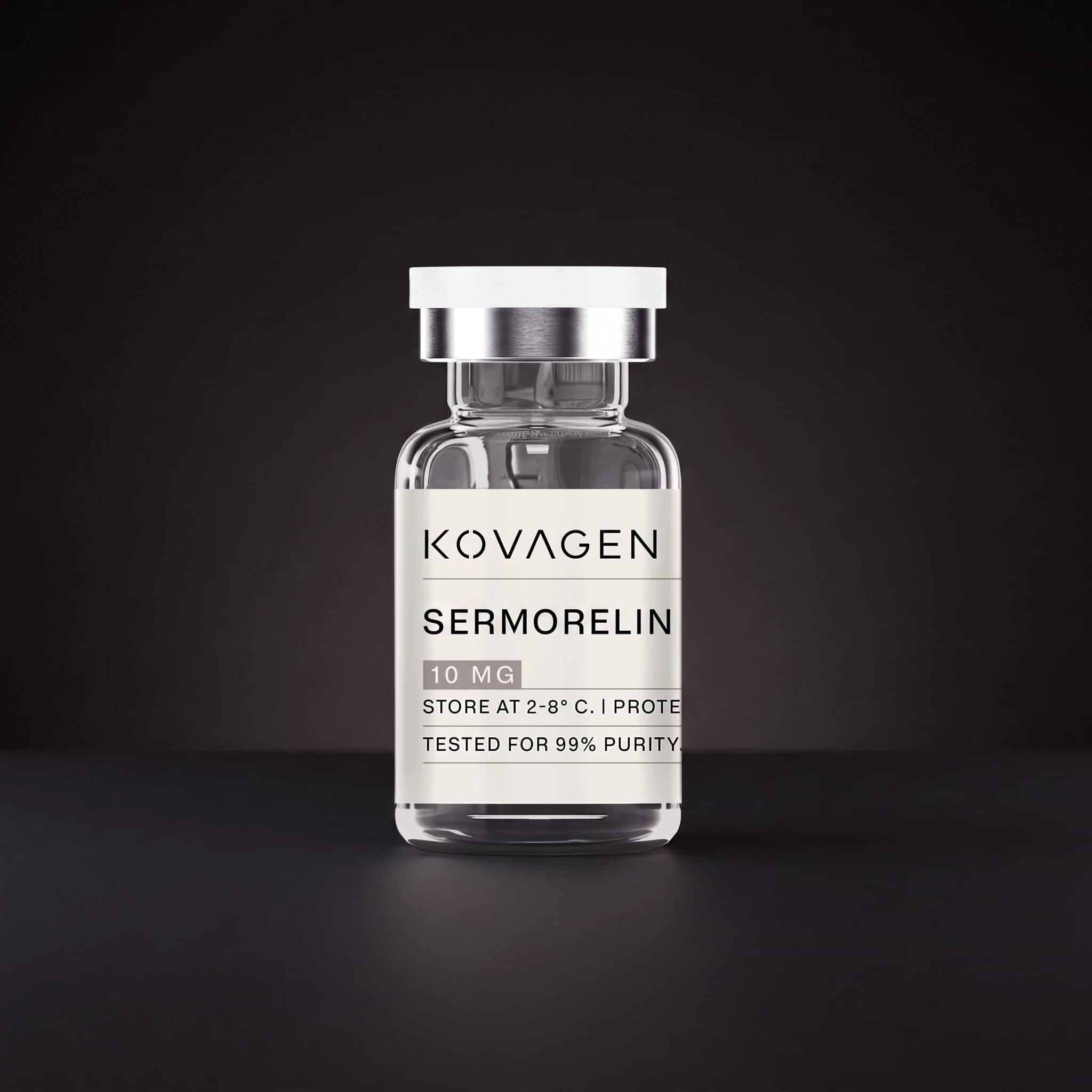
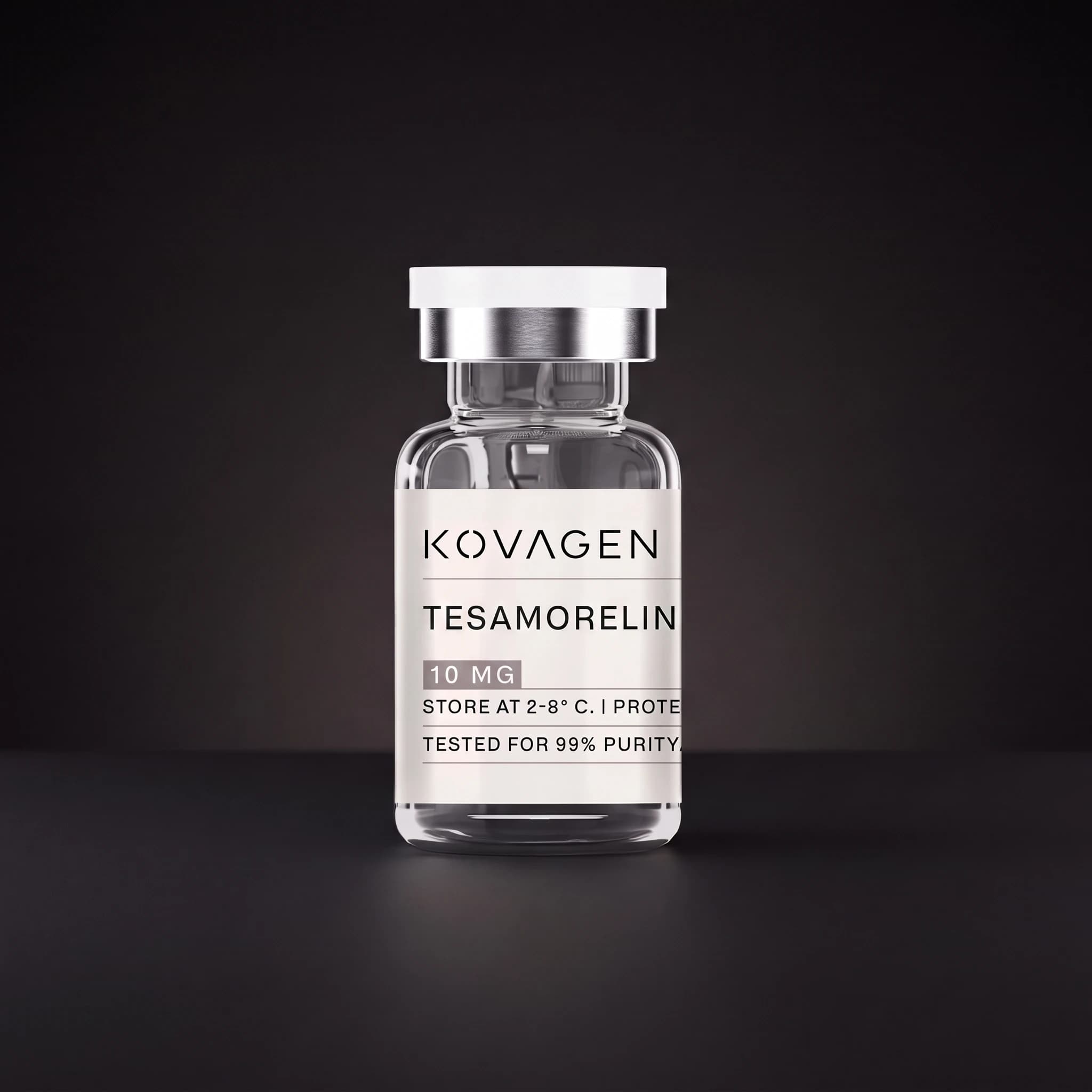
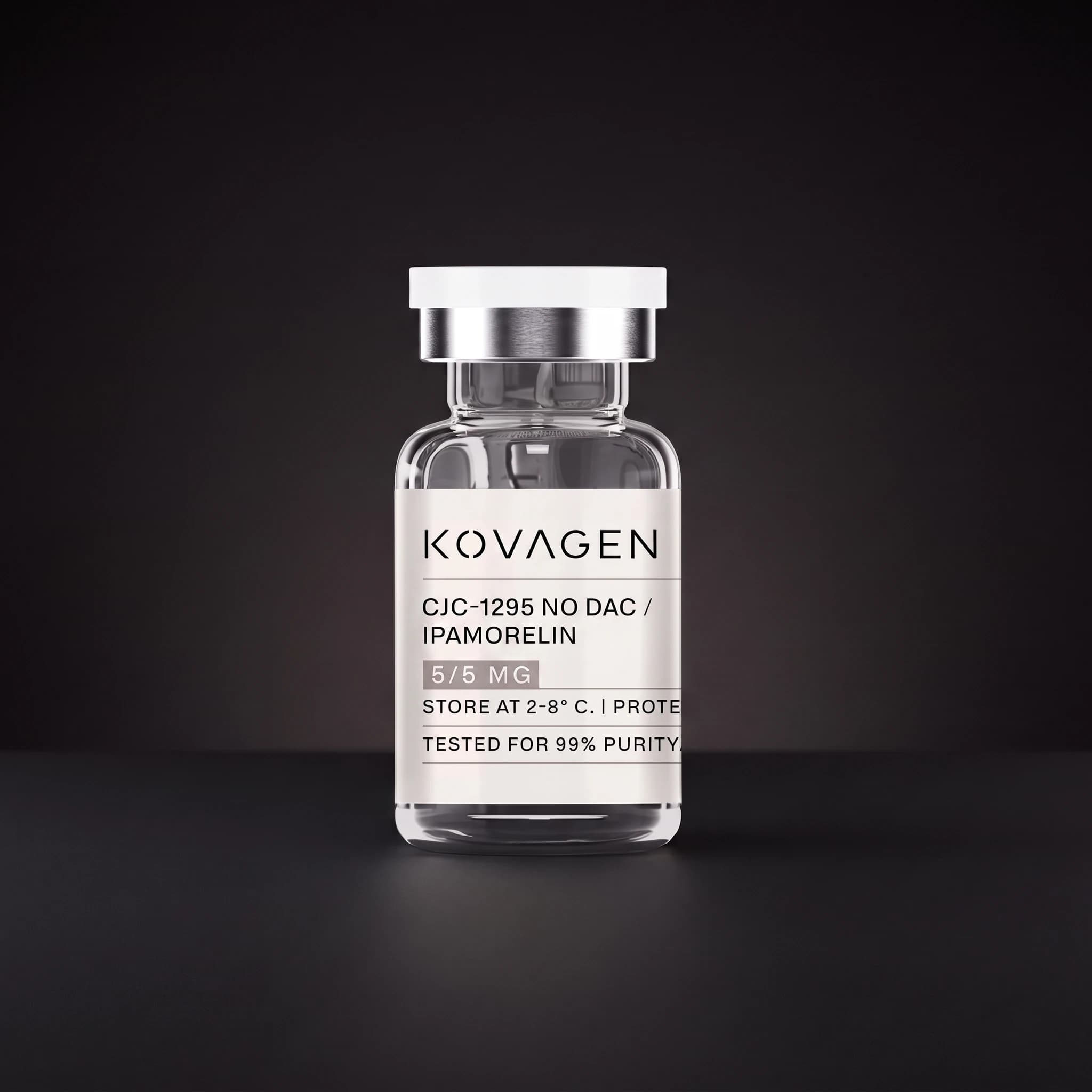
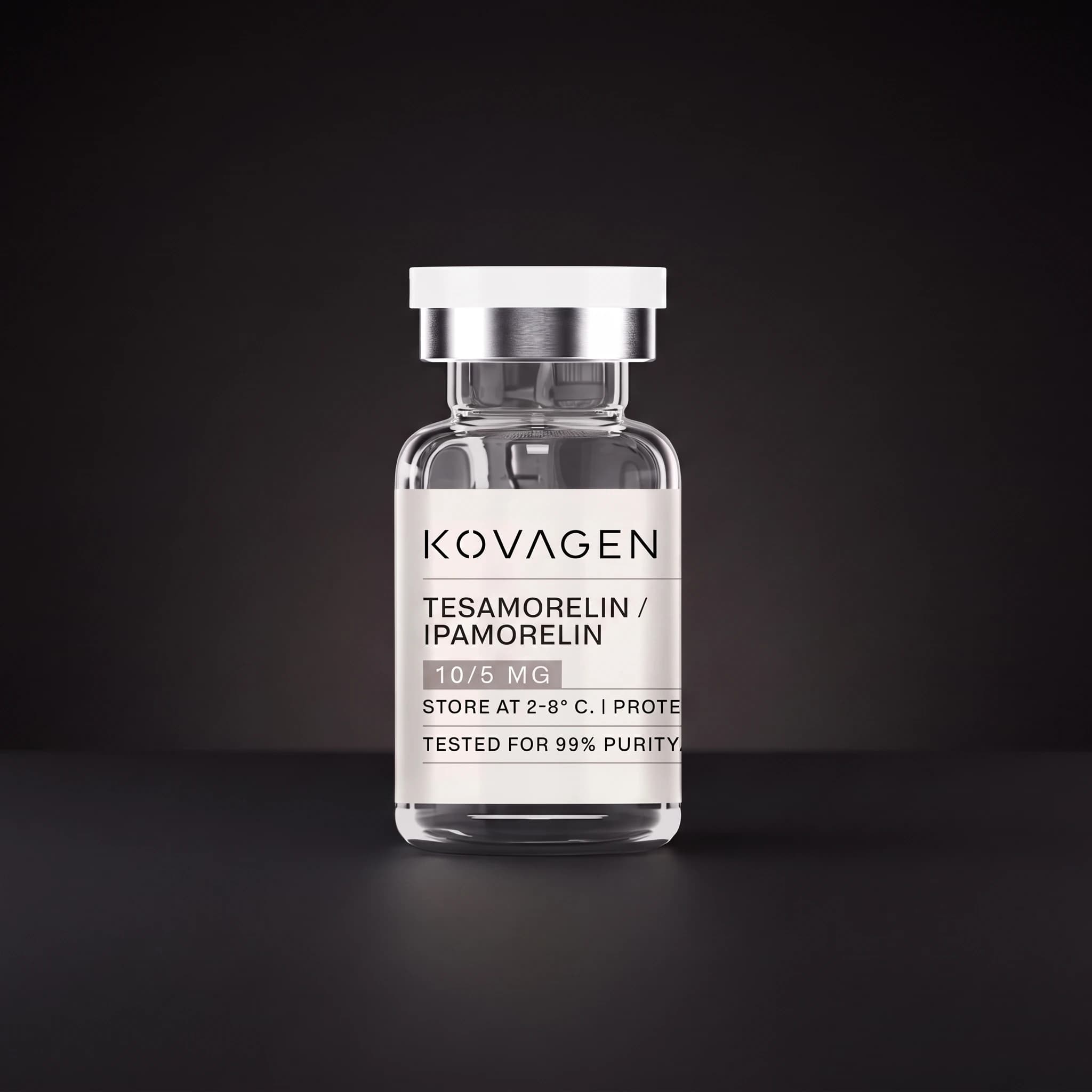
Sermorelin is that fragment produced as the C-terminal amide. CJC-1295 without DAC is the same fragment carrying four amino acid substitutions and no drug-affinity complex. Tesamorelin is an analog of the full 44-residue sequence, N-terminally modified with a trans-3-hexenoyl group.
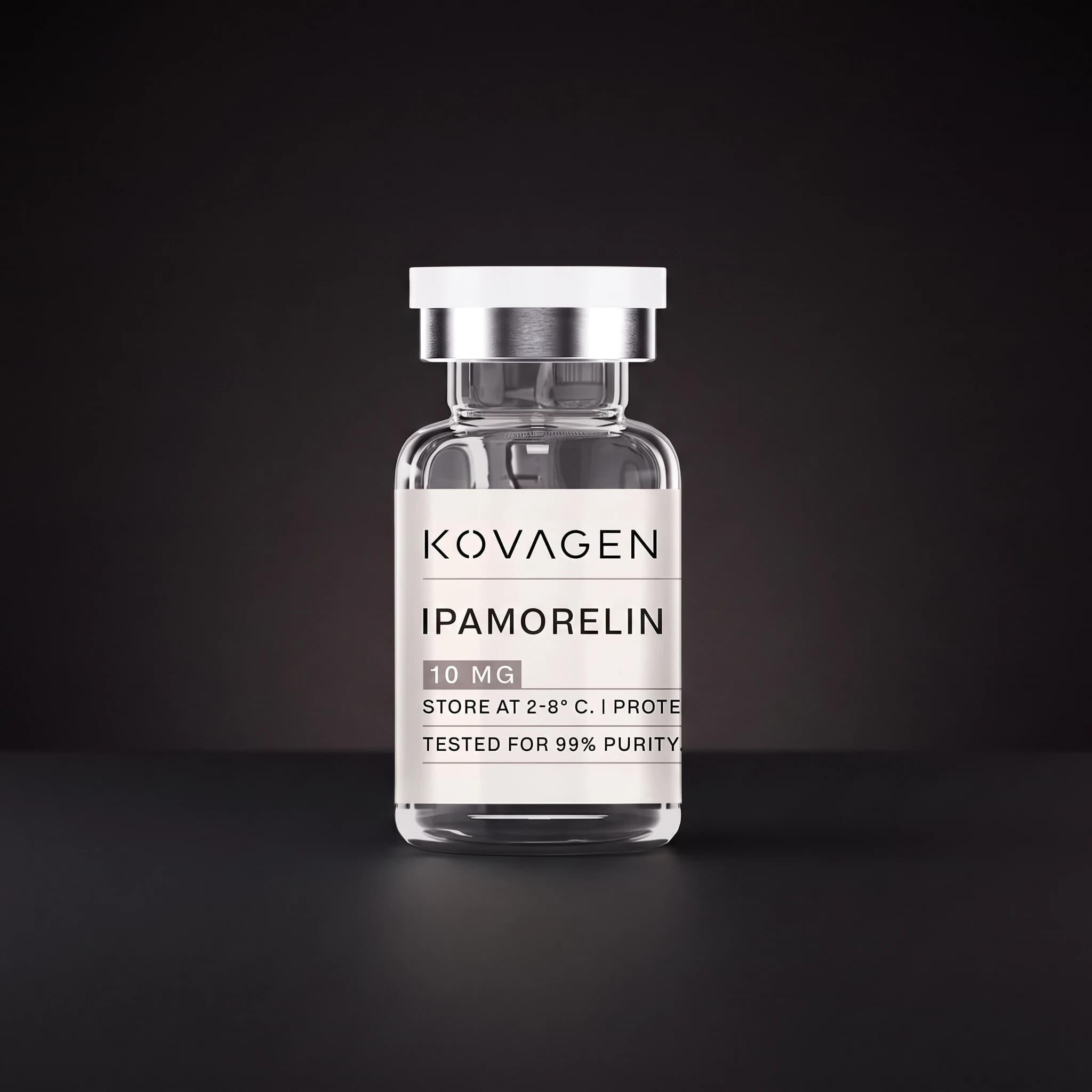
Ipamorelin belongs to a different chemical lineage: it is a synthetic pentapeptide of the growth hormone secretagogue class, structurally unrelated to GHRH, and it contains the non-natural residue 2-aminoisobutyric acid.
Why the distinction matters analytically
Each of these modifications is an identity marker that mass spectrometry can confirm. A C-terminal amide, an N-terminal acyl group and a set of substitutions each shift the expected mass in a predictable way, so a certificate can establish which member of the family is actually in the vial.
That is not a trivial check in this class, because several of these compounds are routinely confused with one another and with variants that carry a drug-affinity complex.
Chain length drives the synthetic difficulty
The compounds in this collection span an unusually wide range for a single class, and the range explains most of what differs between them commercially. Ipamorelin is five residues. Sermorelin and CJC-1295 without DAC are 29. Tesamorelin is 44, which makes it one of the longest sequences in the catalogue.
Because solid-phase synthesis yield compounds multiplicatively across couplings, that span is not a linear difference in difficulty. A 44-residue chain assembled at the same per-step efficiency as a 5-residue one finishes with a far larger population of closely related deletion and truncation products, and those have to be separated from a target they resemble closely. This is why price and availability across the class track length rather than anything about the compounds themselves.
It also shapes what a purity figure means for each. For Ipamorelin, the impurity classes are few and well resolved. For tesamorelin, deletion sequences are numerous and elute close to the target, so the chromatographic method has to be built for the specific separation rather than run as a generic gradient.
The confusion worth avoiding: DAC and no DAC
CJC-1295 is sold in two forms across this category and they are different molecules. The form with a drug-affinity complex carries a maleimide group that binds covalently to serum albumin. The form without it — supplied here, and named accordingly — does not. The mass difference between the two is large and unambiguous on a certificate.
The naming in the wider market is inconsistent enough that the two are frequently conflated, sometimes with the DAC form described simply as CJC-1295 and the non-DAC form as modified GRF 1-29. Both names appear for the same material. The reliable way to establish which is in a vial is the identity result on that batch's certificate, not the product name.
The same applies within the GHRH-derived group generally. Sermorelin, CJC-1295 without DAC and tesamorelin are three distinct molecules with three distinct masses, and mass spectrometry is what separates them in practice.
What is not in this collection
Compounds that act on growth hormone pathways through unrelated chemistry are not grouped here, because the grouping is structural. IGF-1 LR3 is a recombinant protein of 83 residues, produced by expression rather than synthesis, and belongs to neither the GHRH nor the secretagogue class — it has its own compound reference page and is reachable from the full catalogue.
From the catalog
Compounds referenced on this page
For laboratory research use only. Not for human or veterinary consumption.