Support
Why is material shipped at ambient temperature?
Because sealed, desiccated lyophilized powder does not need refrigeration to survive transit. Shipments are not temperature-controlled and do not travel on ice, which is appropriate for the form rather than a compromise.
Freeze-drying removed the water that degradation pathways depend on, so a sealed dry solid is not in the fragile state an aqueous solution would be during a few days in transit.
We would rather say this plainly than imply a cold chain we do not operate. A gel pack that has been at room temperature for two days in a warehouse provides reassurance rather than protection; an intact seal and a desiccant sachet provide protection.
Long-term storage is a different question, and the conditions for it are stated on each batch's certificate.
Why a cold pack could make things worse
There is an argument against shipping this material cold, not merely an argument that cold is unnecessary. A genuine cold chain holds a constant temperature end to end. A gel pack in a box does something different: it keeps the contents cold for a while, then warms gradually, and the parcel arrives somewhere on that curve. That is a temperature cycle, and temperature cycles are where condensation happens — the risk that matters for hygroscopic powder.
The failure is also invisible. A parcel that spent a day cold and a day warming looks identical on arrival to one that stayed cold, so the packaging communicates care while providing an uncontrolled thermal history instead of a controlled one.
For sealed, desiccated lyophilized powder, a stable ambient journey is the lower-risk option as well as the cheaper one. Once the vial reaches you, cold storage becomes appropriate — that is what the conditions on the certificate describe, and it is a different question from transit.
From the catalog
Compounds referenced on this page
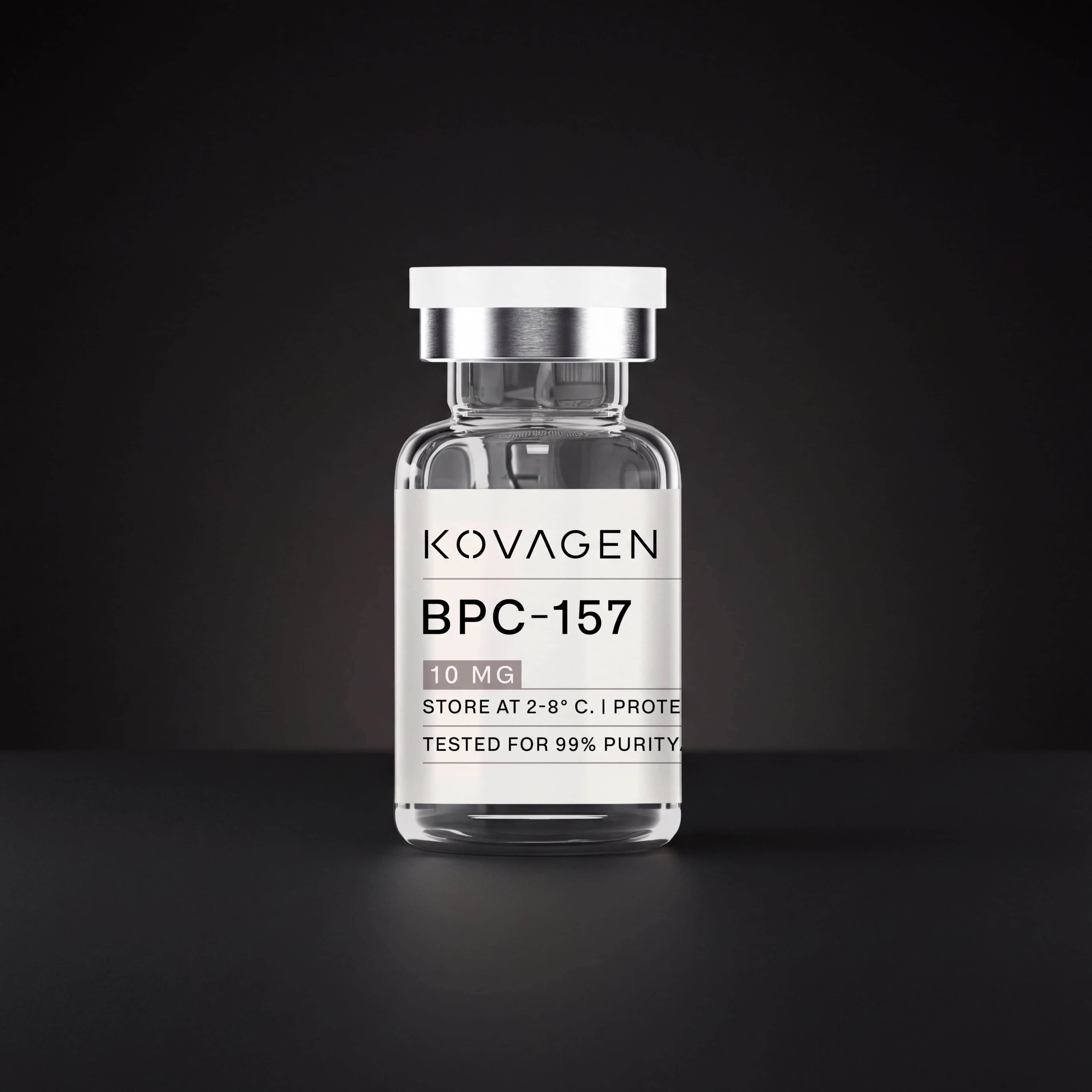
For laboratory research use only. Not for human or veterinary consumption.