Collection
Thymosin peptides: alpha-1 and beta-4
What groups these compounds, and what does not
Both were originally isolated from thymic tissue, which is where the shared name comes from. The alpha and beta thymosins are otherwise separate families rather than variants of one molecule.
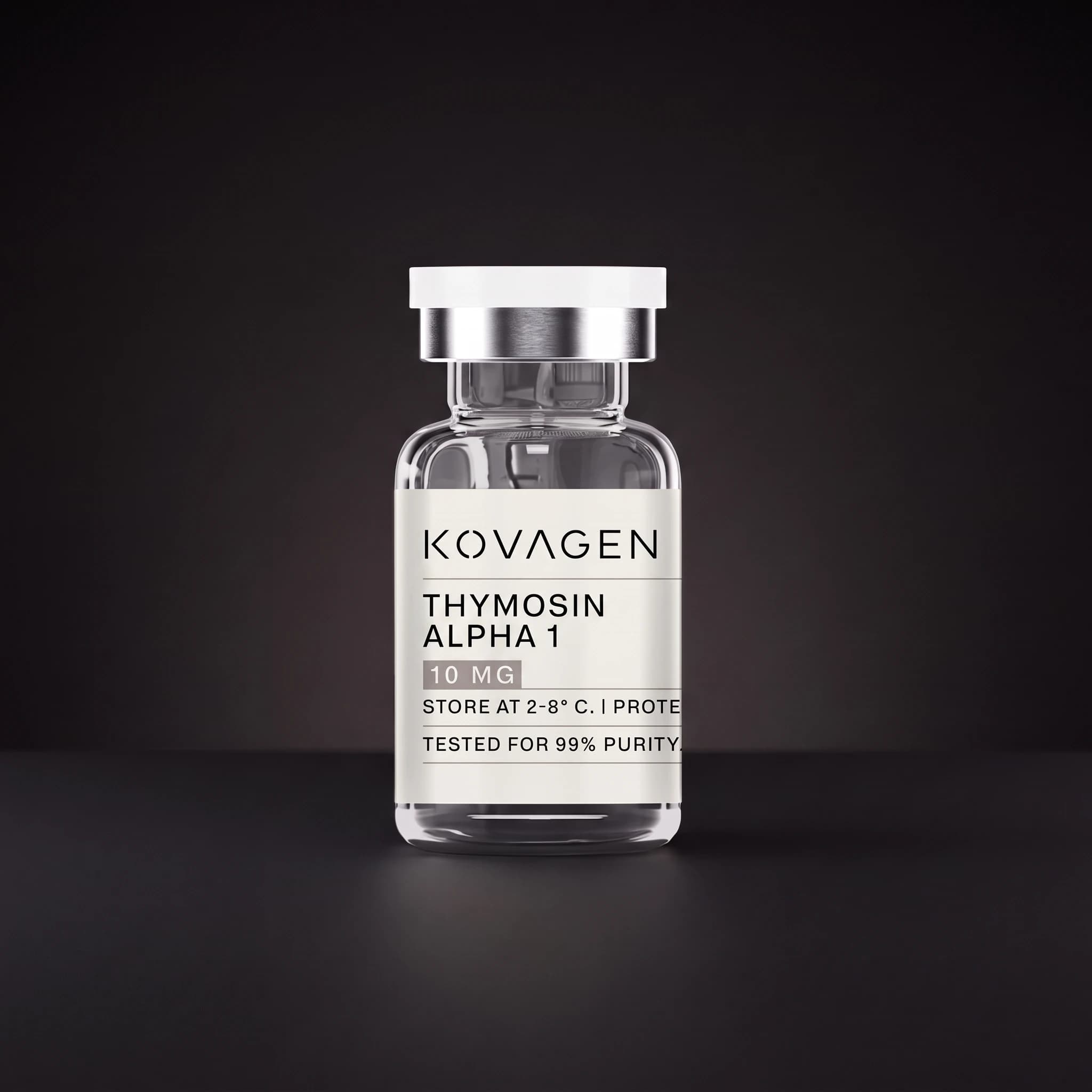
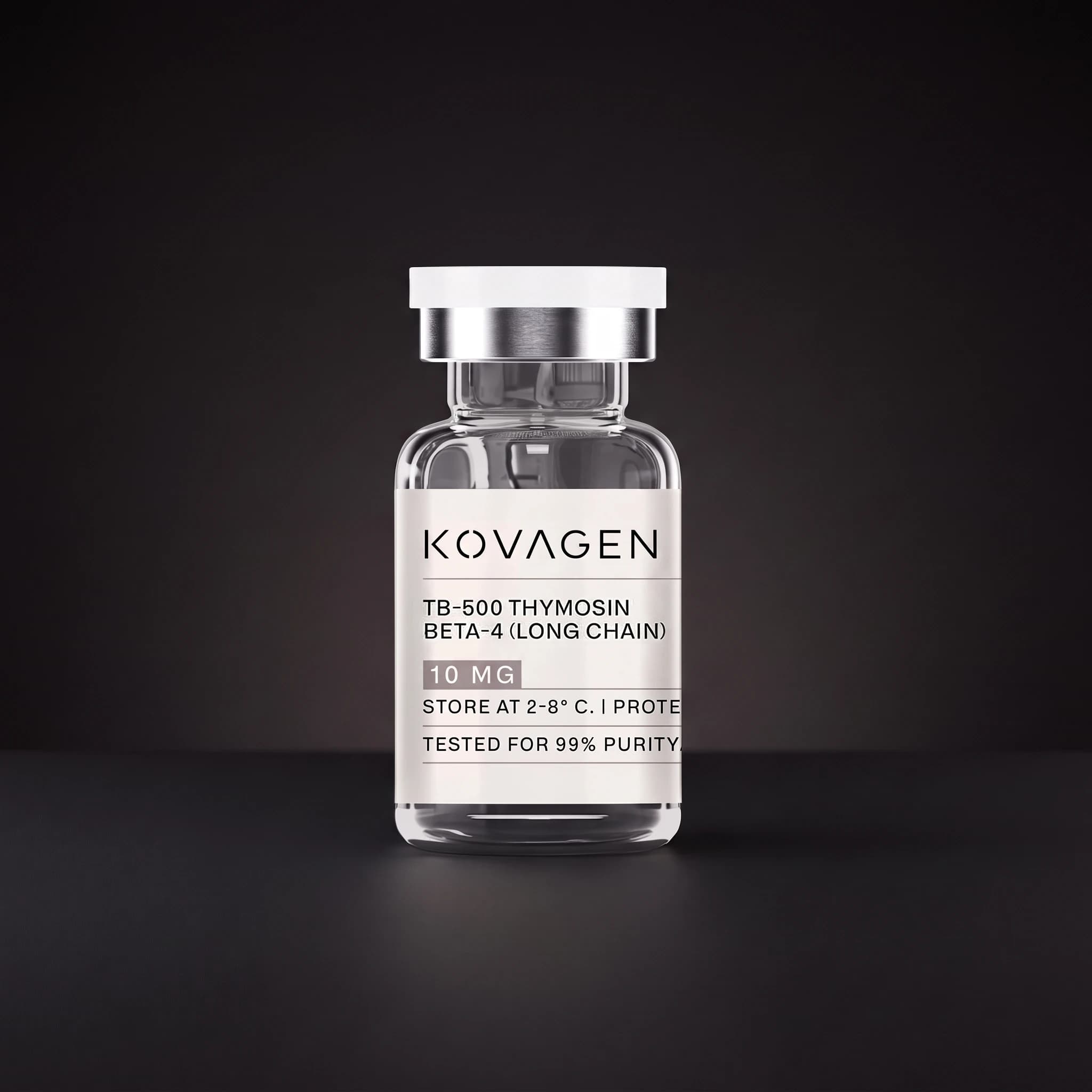
Thymosin alpha-1 is a 28-amino-acid peptide with an N-terminally acetylated terminus, produced here synthetically. TB-500 is supplied as the full-length 43-residue thymosin beta-4 sequence, an actin-sequestering peptide.
The TB-500 distinction to check
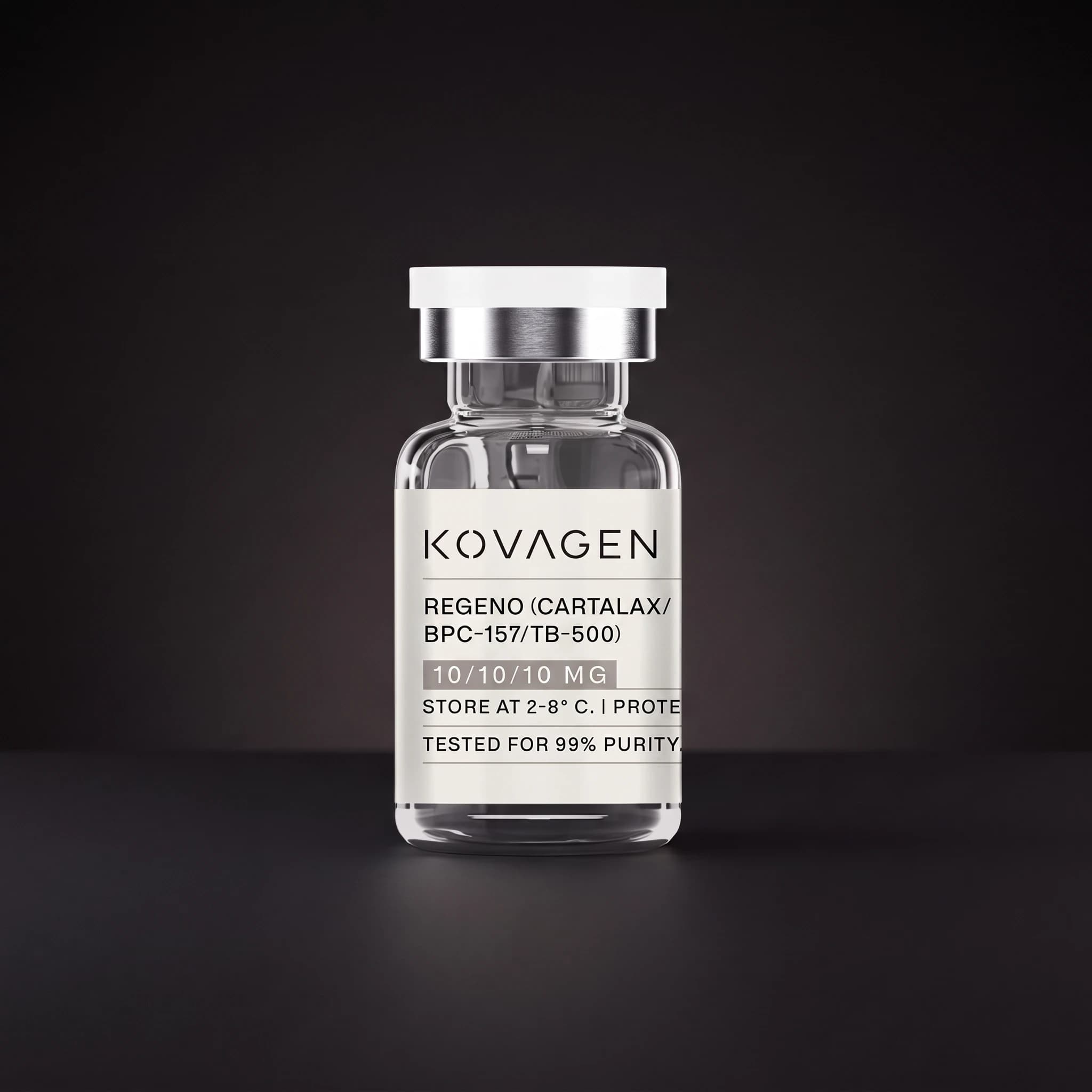
TB-500 is sold across this category in two quite different forms: the full 43-amino-acid thymosin beta-4 sequence, and a short active fragment of it. They are not interchangeable and they have very different molecular masses.
The material here is the long-chain form. Because the mass difference between full-length and fragment is large, this is precisely the kind of thing a mass spectrometry result on a certificate settles — and precisely the kind of thing a supplier without per-batch certificates cannot demonstrate.
For thymosin alpha-1, the N-terminal acetyl group is the identity marker worth confirming, since the non-acetylated sequence is a distinct compound.
Why a shared name is a poor guide to chemistry
The thymosins were named for the tissue they were isolated from, at a time when that was the most useful thing known about them. Tissue of origin turned out not to predict structure: the alpha and beta thymosins have different lengths, different sequences and different structural behaviour, and they are grouped together only by the history of their discovery.
This is a general hazard in peptide nomenclature and worth recognising, because it recurs. Names in this field encode where a molecule was found, who found it, or what a programme called it — and none of those reliably indicate what the molecule is. Thymosin alpha-1 at 28 residues and thymosin beta-4 at 43 residues are as different from each other as either is from an unrelated peptide of similar length.
The grouping is published here because the shared name causes real confusion and a page that addresses it directly is more useful than one that pretends the two are variants of a single compound.
The analytical demand of a 43-residue sequence
TB-500 as supplied here is the full-length thymosin beta-4 sequence, which makes it among the longest synthetic peptides in the catalogue and the most demanding to characterise. At that length the population of possible deletion products is large, and each differs from the target by a single residue — so they elute close to it and the chromatographic method has to be built to resolve them rather than run generically.
Thymosin alpha-1, at 28 residues with a single acetylation to confirm, is a more tractable analytical problem. The acetyl group adds forty-two mass units, a large enough increment that acetylated and non-acetylated species are unambiguously distinguishable by mass alone.
Both are supplied as sealed lyophilized powder, and thymosin alpha-1 has its own handling page because its length and modification give it a distinct enough profile to be worth treating separately.
From the catalog
Compounds referenced on this page
For laboratory research use only. Not for human or veterinary consumption.