Compound reference
TB-500: structure and analysis
Explore the compounds
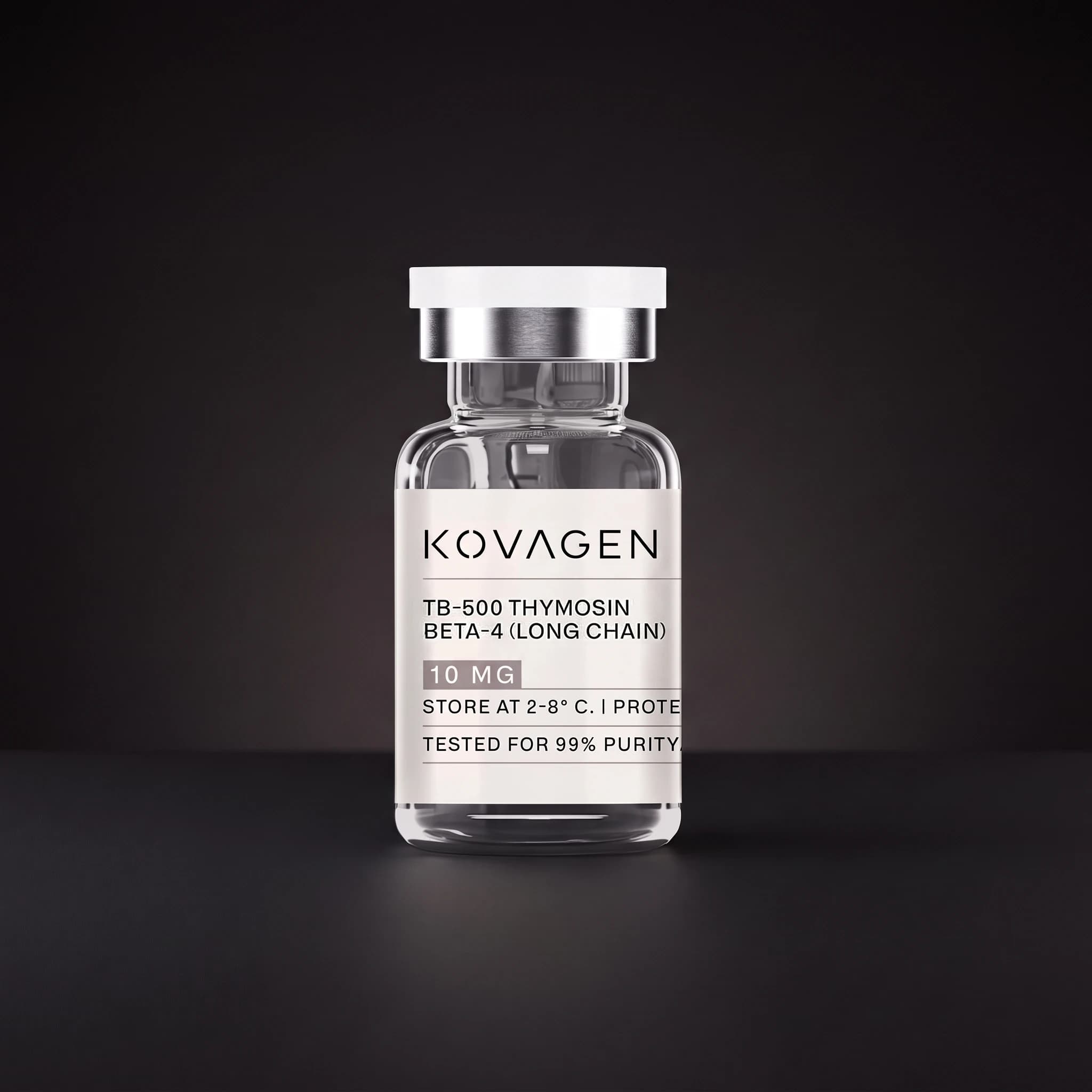
TB-500 is a thymosin beta-4, long chain supplied for laboratory research. Its molecular formula is C212H350N56O78S, with an average molecular weight of 4963 g/mol and a monoisotopic mass of 4960.486 Da. This page covers its structure, how it is produced, and how identity and purity are established — for a batch, on that batch's certificate of analysis.
What is TB-500?
TB-500 is supplied here as the long-chain form: the full 43-amino-acid thymosin beta-4 sequence, an actin-sequestering peptide, rather than a short active fragment of it.
That distinction is the single most important fact about buying this compound. TB-500 is sold across this category in both forms — the complete 43-residue sequence and a much shorter fragment — and they are not the same material. Their molecular masses differ by a large margin.
At 43 residues it is the longest synthetic peptide in this catalogue, exceeded in size only by the recombinant protein IGF-1 LR3.
How is TB-500 produced?
Assembled by solid-phase peptide synthesis: the chain is built one residue at a time on an insoluble resin support, then cleaved from the resin, deprotected and purified — most commonly by reversed-phase high-performance liquid chromatography. The purified material is lyophilized to a dry solid.
The impurity profile that appears on a certificate is a record of where that process was imperfect: deletion sequences from an incomplete coupling, truncated chains, and species retaining a protecting group.
What are the molecular figures for TB-500?
Calculated from the formula C212H350N56O78S, not measured. The average molecular weight counts the natural abundance of each element's isotopes; the monoisotopic mass is the mass of the single most abundant isotopic composition, which is the figure a mass spectrometer is usually compared against.
Two masses describe this molecule and they are not the same number. The monoisotopic mass assumes every carbon is carbon-12; the tallest peak in the isotope envelope sits 2 carbon-13 substitutions above it, because for a molecule with 212 carbons that is the most probable composition. A specification or a database quoting the higher figure is not necessarily wrong — it is quoting the other peak, and both are given here.
Adducts, salts, modifications and multiply charged species all move an observed m/z away from any figure calculated here, and a certificate reports what was measured for a batch rather than what was expected of it.
What is the sequence of TB-500?
No one-letter amino-acid sequence is published for TB-500 on this page. The cited record's notation leaves the stereochemistry of several residues undefined, so it cannot be rewritten as a one-letter sequence without asserting a configuration the record does not state.
What establishes the material in a specific vial is the identity method and result stated on that batch's certificate, not a notation on a reference page.
How does TB-500 compare with related compounds?
Related compounds are not interchangeable. Published figures differ between them, and in this catalogue three compounds share a GHRH backbone while several share the same structural class — which is exactly why identity is confirmed analytically rather than inferred from the label.
How is the identity of TB-500 confirmed?
Mass spectrometry settles the question the product name alone cannot: whether the vial contains the full-length sequence or a fragment. The mass difference between them is large, so this is an unambiguous confirmation rather than a marginal one.
It is precisely the check a supplier without per-batch certificates cannot offer, and precisely the ambiguity a purchaser is otherwise asked to take on trust.
Which impurities can appear in TB-500?
Forty-three coupling steps make deletion and truncation sequences the dominant impurity class, and at this length they are numerous and closely spaced in retention. Resolving them demands a well-developed gradient rather than a generic one.
Chain length also means the molecule begins to have genuine secondary structure in solution, which a pentapeptide does not. That affects chromatographic behaviour and is a reason methods for long peptides are not simply scaled-up versions of methods for short ones.
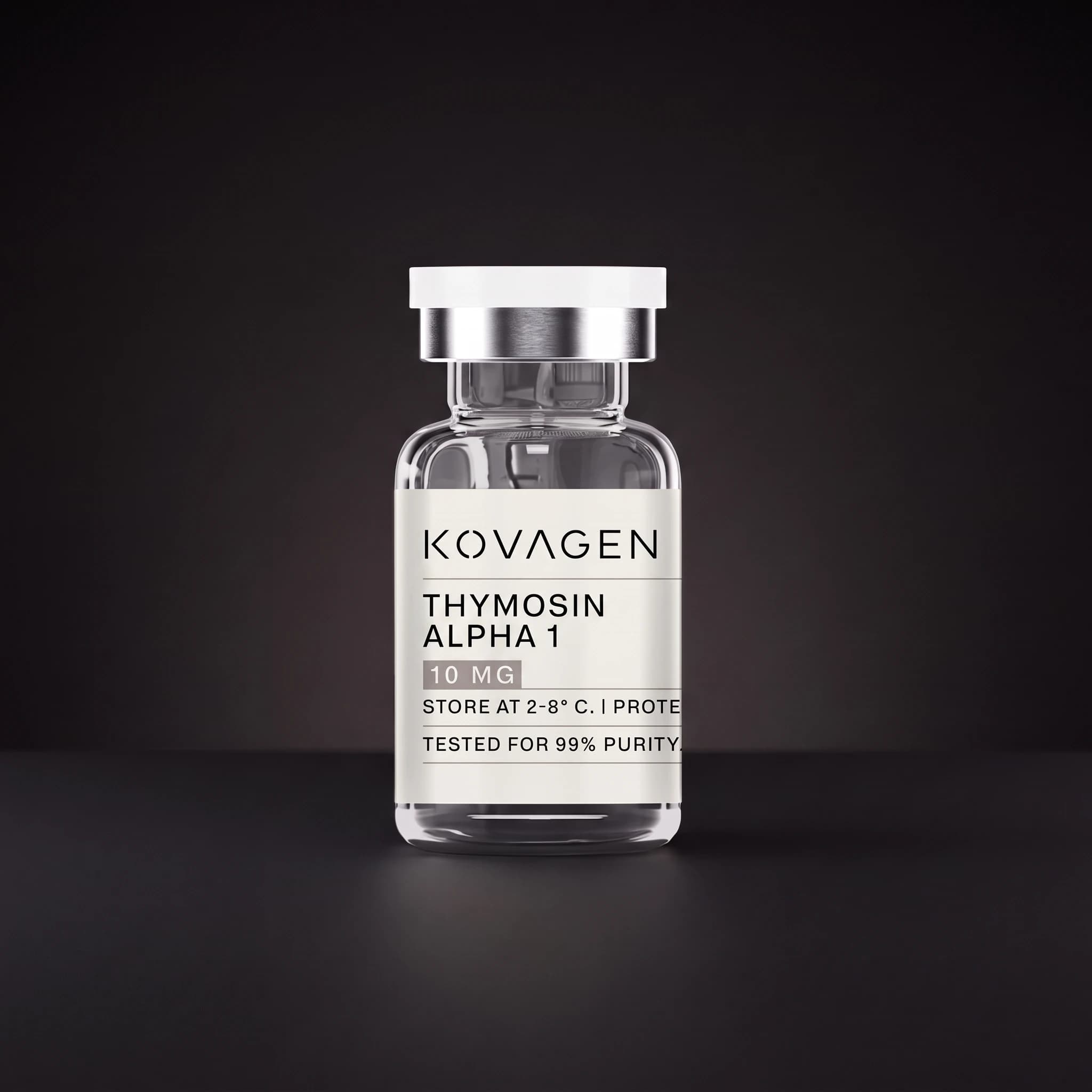
Thymosin alpha-1 shares a name and a tissue of origin with this compound and is otherwise unrelated in structure. The two belong to separate families and should not be treated as variants of one another.
What does a certificate of analysis for TB-500 report?
A certificate for a batch of this material names the batch, names the issuing laboratory, and states for each parameter both the method used and the specification the result was measured against. Identity and purity are the two core results; net peptide content states how much of the fill weight is actually peptide.
A certificate belongs to a batch, not to a product line. When a new batch is released it is tested again, and the certificate published against it is that batch's certificate — a previous batch's result is never carried forward.
Is TB-500 for human use?
No. This page describes structure and analysis. It makes no claim about what this compound does, and none should be inferred from it. Material is supplied for laboratory research use only: it is not a drug, food, dietary supplement, cosmetic or medical device, it is not for human or veterinary consumption, and no dosing, administration or reconstitution guidance is provided for any such use.
References
- Thymosin beta-4 — PubChem, National Library of Medicine
- Thymosin beta-4 — human — UniProt Knowledgebase
- Chemical characterization of thymosin beta 4 — J Biol Chem, 1982
Related reading
- How to read a peptide certificate of analysis
- HPLC purity testing for peptides
- Handling and storing TB-500
- Glow Blend: structure and analysis
- Klow Blend: structure and analysis
- Regeno Blend: structure and analysis
- Wolverine Blend: structure and analysis
- BPC-157: structure and analysis
- Thymosin Alpha-1: structure and analysis
- Handling and storing Thymosin Alpha-1
From the catalog
Compounds referenced on this page
For laboratory research use only. Not for human or veterinary consumption.