Handling
Handling and storing TB-500
The important thing about a TB-500 vial is knowing which TB-500 is in it, and the certificate is what tells you. This page covers sealed, desiccated lyophilized powder only: how it is stored, what to inspect, and which certificate results to read. It contains no reconstitution, dosing or administration guidance for any human or animal use.
Full-length or fragment: check, do not assume
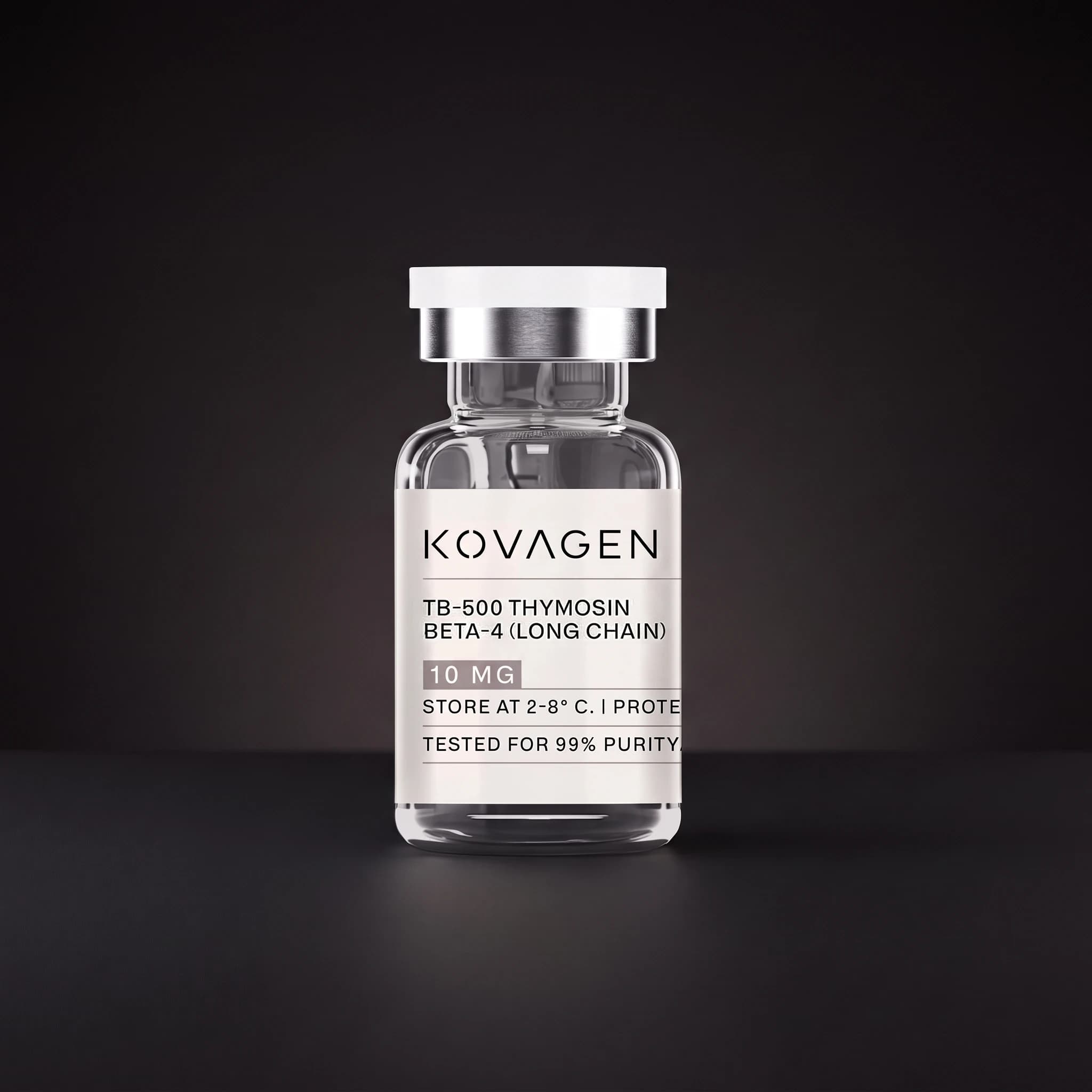
TB-500 is supplied across this category in two materially different forms — the complete 43-amino-acid thymosin beta-4 sequence, and a short active fragment of it. The name is used for both. The material here is the long-chain form.
Because the mass difference between them is large, a mass spectrometry result on a certificate resolves it immediately. This is the clearest case in the catalogue of a certificate answering a question the product label cannot, and a reason to retrieve the certificate rather than rely on the name.
A long peptide is a more demanding analytical subject
Forty-three residues means forty-three coupling steps, so deletion and truncation products are the impurity class to expect, and they sit close to the target in a chromatogram. A purity figure for a peptide this long says more about the quality of the separation than the same figure would for a pentapeptide.
Chain length has no bearing on how the sealed vial should be stored. It bears on how the certificate should be read.
What the two forms mean in practice
The full 43-residue sequence and the short fragment are different molecules with different masses, and the price difference between them is substantial — a 43-residue chain requires 43 coupling steps and a demanding purification, where the fragment requires neither. A TB-500 offered well below the going rate for the long-chain form is worth checking rather than assumed to be a better deal.
The check is the identity result on the batch's certificate, and it is unambiguous: the mass difference between the two forms is large, so there is no interpretive judgement involved. This is the clearest example in the catalogue of a question the label cannot answer and a certificate can.
It also means a comparison between suppliers is only meaningful once both forms are established. Two quotes for TB-500 may be quotes for two different compounds.
Sequence composition, and what it means for storage
Thymosin beta-4 contains no methionine, cysteine or tryptophan — the residues most associated with oxidation and photodegradation. Light and oxidative pathways are therefore less prominent for this compound than for sequences that carry them, which is why light protection is not emphasised here as it is for the melanocortin peptides.
Moisture and temperature remain the variables that matter, and they matter for the same reasons they do across the catalogue: lyophilized powder is hygroscopic, and degradation rates fall as temperature does. The seal, the desiccant and the stated storage temperature are the whole of it.
What this page does not cover
Reconstitution. We do not provide dosing, administration or reconstitution guidance for human or animal use, in any channel — that is a fixed boundary rather than an omission. Everything above concerns sealed, unopened lyophilized material, which is a question we can answer.
Handling, step by step
- Confirm which form you have. Retrieve the certificate by batch number and read the identity result. It distinguishes the full 43-residue sequence from the short fragment sold under the same name.
- Keep the vial sealed and desiccated. Leave the stopper and crimp undisturbed and the desiccant in place.
- Store at the temperature stated on the certificate. Conditions are stated per batch and apply to an unopened vial.
- Read the purity result alongside the method. For a 43-residue peptide, deletion sequences are numerous and closely spaced. The method that produced the figure is part of the figure.
From the catalog
Compounds referenced on this page
For laboratory research use only. Not for human or veterinary consumption.