Handling
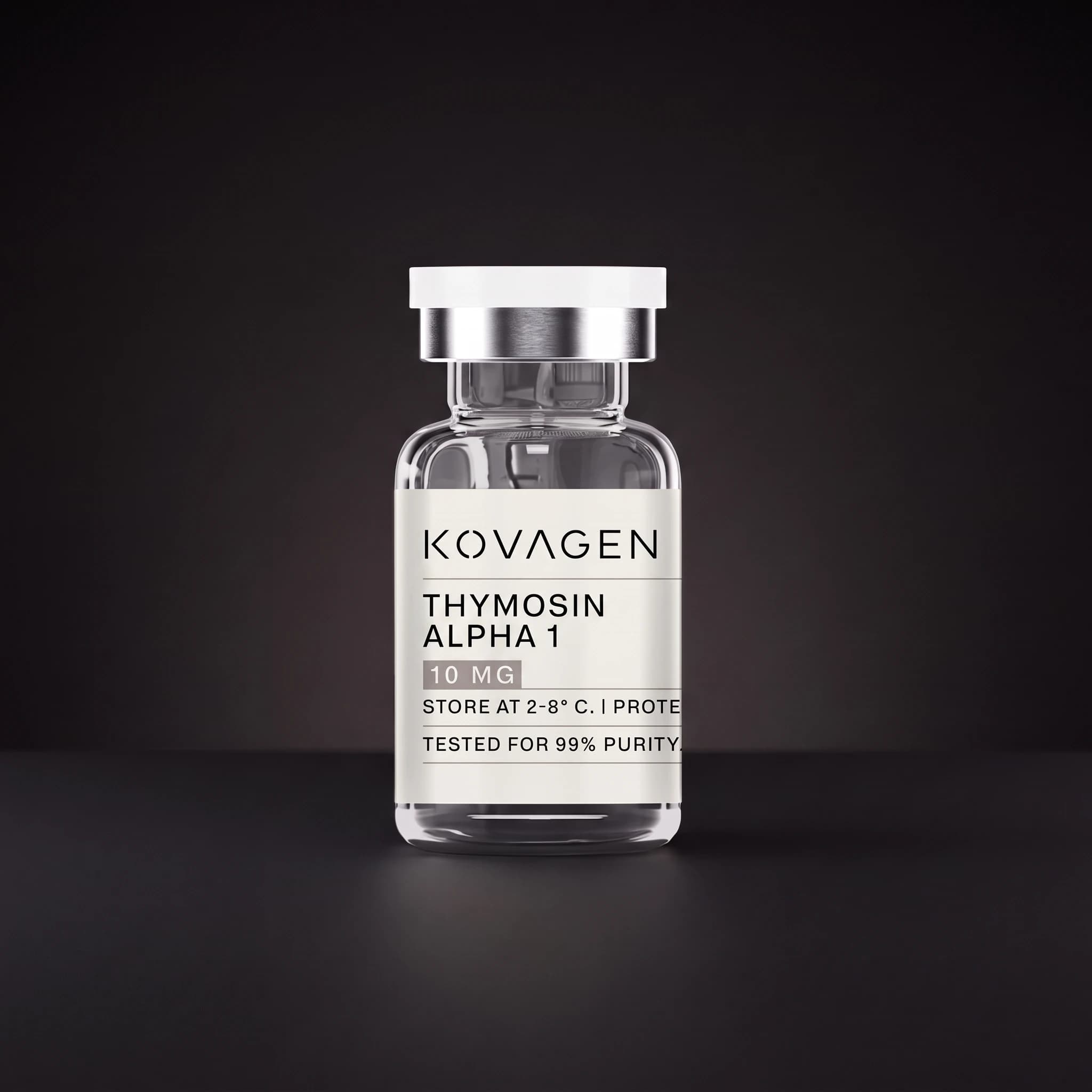
Handling and storing Thymosin Alpha-1
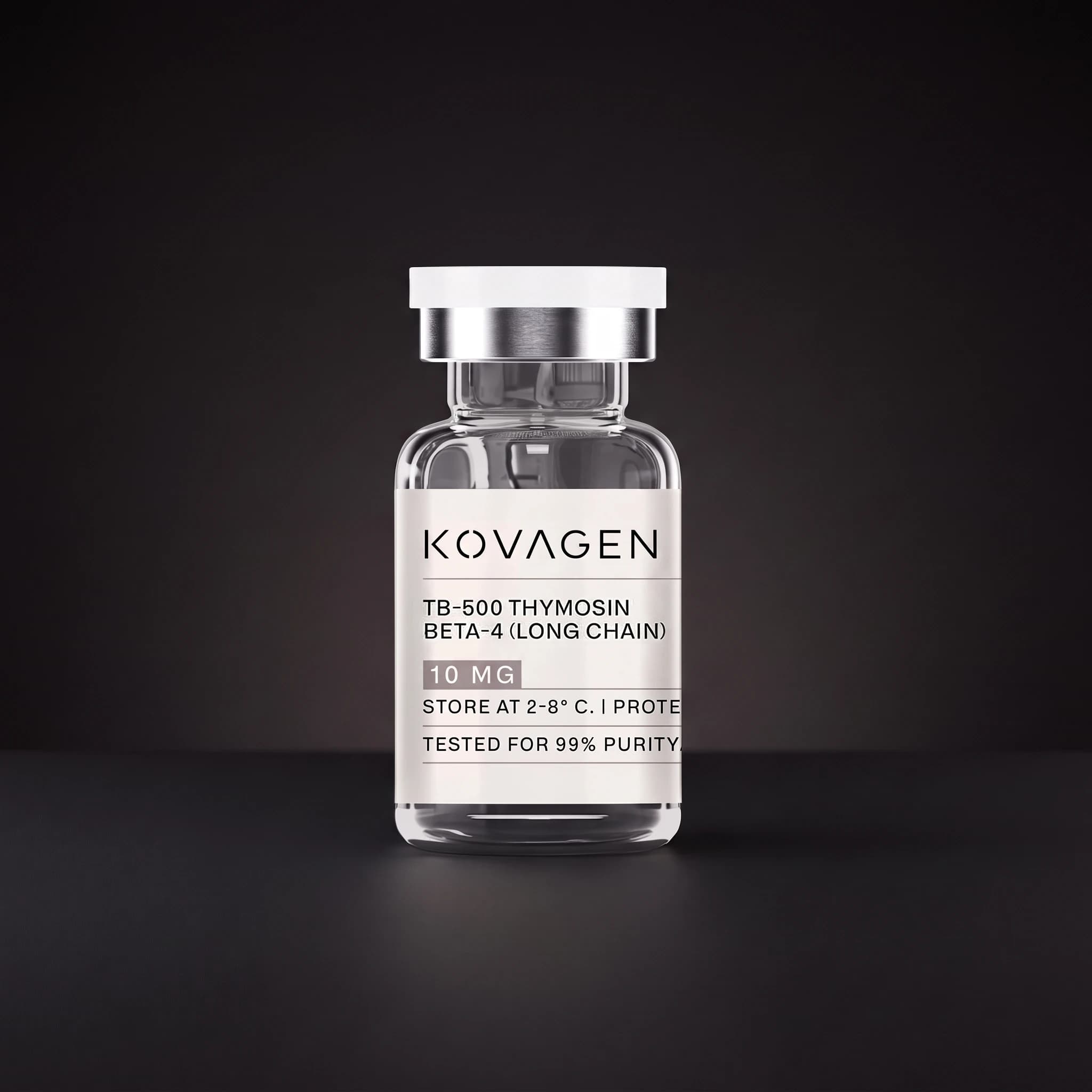
Thymosin alpha-1 shares a name with TB-500 and nothing else structurally, which is worth knowing before either vial is put away. This page covers sealed, desiccated lyophilized powder only: how it is stored, what to inspect, and which certificate results to read. It contains no reconstitution, dosing or administration guidance for any human or animal use.
Two thymosins, two unrelated molecules
The alpha and beta thymosins are separate families. Both were isolated from thymic tissue, which is where the shared name comes from, but thymosin alpha-1 is a 28-residue acetylated peptide and thymosin beta-4 is a 43-residue actin-sequestering peptide. They are not variants of one another.
Their masses differ substantially, so a certificate distinguishes them without difficulty. The risk is one of labelling and record-keeping rather than analysis: two similarly named vials of white powder are easy to confuse in storage.
Acetylation is part of the identity
The N-terminal acetyl group is a structural feature of this compound, not an optional modification. The non-acetylated sequence is a distinct molecule, and because acetylation adds forty-two mass units, its presence is clearly confirmable on a certificate.
This is one of the more easily verified identity questions in the catalogue, which makes it a reasonable one to actually check.
A 28-residue chain, and what that implies
At 28 residues this sits in the upper-middle of the catalogue's size range — long enough that deletion sequences are a realistic impurity class and that the chromatographic separation has to resolve species differing from the target by a single amino acid. A purity figure for a peptide of this length reflects the quality of that separation more than the same figure would for a pentapeptide.
The sequence is also strongly acidic, which affects how it behaves under reversed-phase conditions and is part of why its analytical method is developed for the compound rather than applied generically. None of this changes how a sealed vial should be stored; it changes what the certificate is reporting.
The fill weight on the label is the mass of lyophilized solid, which for a peptide of this length and composition diverges from the mass of peptide by a meaningful margin. Net peptide content on the batch certificate is the figure to work from.
Storage is conventional, and that is worth saying plainly
Nothing about this compound demands unusual handling. It contains no methionine or cysteine to oxidise readily and no metal centre to disturb, and as a synthetic peptide rather than a folded protein it has no tertiary structure to lose. Sealed, dry and cold at the temperature stated on the certificate is the whole requirement.
The reason this compound has a page of its own is the naming confusion with TB-500 and the acetylation to confirm, not a fragility that needs managing. Where a compound's handling is ordinary, saying so is more useful than manufacturing distinctions.
What this page does not cover
Reconstitution. We do not provide dosing, administration or reconstitution guidance for human or animal use, in any channel — that is a fixed boundary rather than an omission. Everything above concerns sealed, unopened lyophilized material, which is a question we can answer.
Handling, step by step
- Keep the vial sealed and desiccated. Leave the stopper and crimp undisturbed and the desiccant in place.
- Store at the temperature stated on the certificate. Conditions are stated per batch and apply to an unopened vial.
- Label storage clearly to distinguish it from TB-500. The two compounds share a name element and appear identical. Recording the batch number against your own inventory prevents a confusion the vials themselves invite.
- Confirm acetylation on the certificate. Read the identity result for confirmation of the N-terminal acetyl group. The non-acetylated sequence is a different compound.
From the catalog
Compounds referenced on this page
For laboratory research use only. Not for human or veterinary consumption.