Handling
Handling and storing GHK-Cu
GHK-Cu is the only metal-complexed compound in this catalogue, and that changes what handling means for it. This page covers sealed, desiccated lyophilized powder only: how it is stored, what to inspect, and which certificate results to read. It contains no reconstitution, dosing or administration guidance for any human or animal use.
Why this compound is handled differently
The copper(II) ion is coordinated to the peptide, not covalently bound to it. That coordination is what makes the material GHK-Cu rather than GHK, and it is a property that can in principle be disturbed — by competing chelators, by pH extremes, or by contact with materials that bind copper more strongly than the peptide does.
For sealed, dry, lyophilized powder none of those are realistic threats. They become relevant once the material is no longer a dry solid in a closed vial, which is why keeping the seal and the desiccant intact matters more here than for a plain synthetic peptide.
Colour is information
The blue colour comes from the coordinated copper. A batch that appears markedly paler or a different colour than expected is worth querying against its certificate rather than assumed to be a cosmetic variation, because colour in this compound tracks a structural feature.
This is an observation, not a specification. The certificate's copper content result is the measurement of record.
Larger fills, same rules
GHK-Cu is supplied at 50 mg and 100 mg, the largest fill weights in the catalogue. A larger mass of lyophilized solid has more surface area exposed to the vial headspace, which makes the desiccant's job larger rather than smaller.
The label weight is the mass of lyophilized solid. For a copper complex, that solid includes the coordinated metal and any counter-ions as well as the peptide, so net peptide content and total fill weight diverge more here than for a simple synthetic sequence.
What this page does not cover
Reconstitution. We do not provide dosing, administration or reconstitution guidance for human or animal use, in any channel — that is a fixed boundary rather than an omission. Everything above concerns sealed, unopened lyophilized material, which is a question we can answer.
Handling, step by step
- Keep the vial sealed and desiccated. Leave the stopper and crimp undisturbed and the desiccant in place. Lyophilized powder is hygroscopic, and moisture is the variable that enables degradation.
- Store at the temperature on the certificate. Storage conditions are stated per batch on that batch's certificate of analysis and describe an unopened vial. A retest or expiry date refers to material held under those conditions.
- Protect from light. Keep the vial in its outer carton. The histidine imidazole and the coordinated copper both make this compound a reasonable candidate for light protection.
- Check the copper result, not just the purity result. On the certificate, read the copper content against its specification alongside the peptide purity figure. A correct tripeptide with insufficient copper is a different material.
- Record the batch number. Note the batch number from the label against your own records, so the certificate for your specific vial stays retrievable later.
From the catalog
Compounds referenced on this page
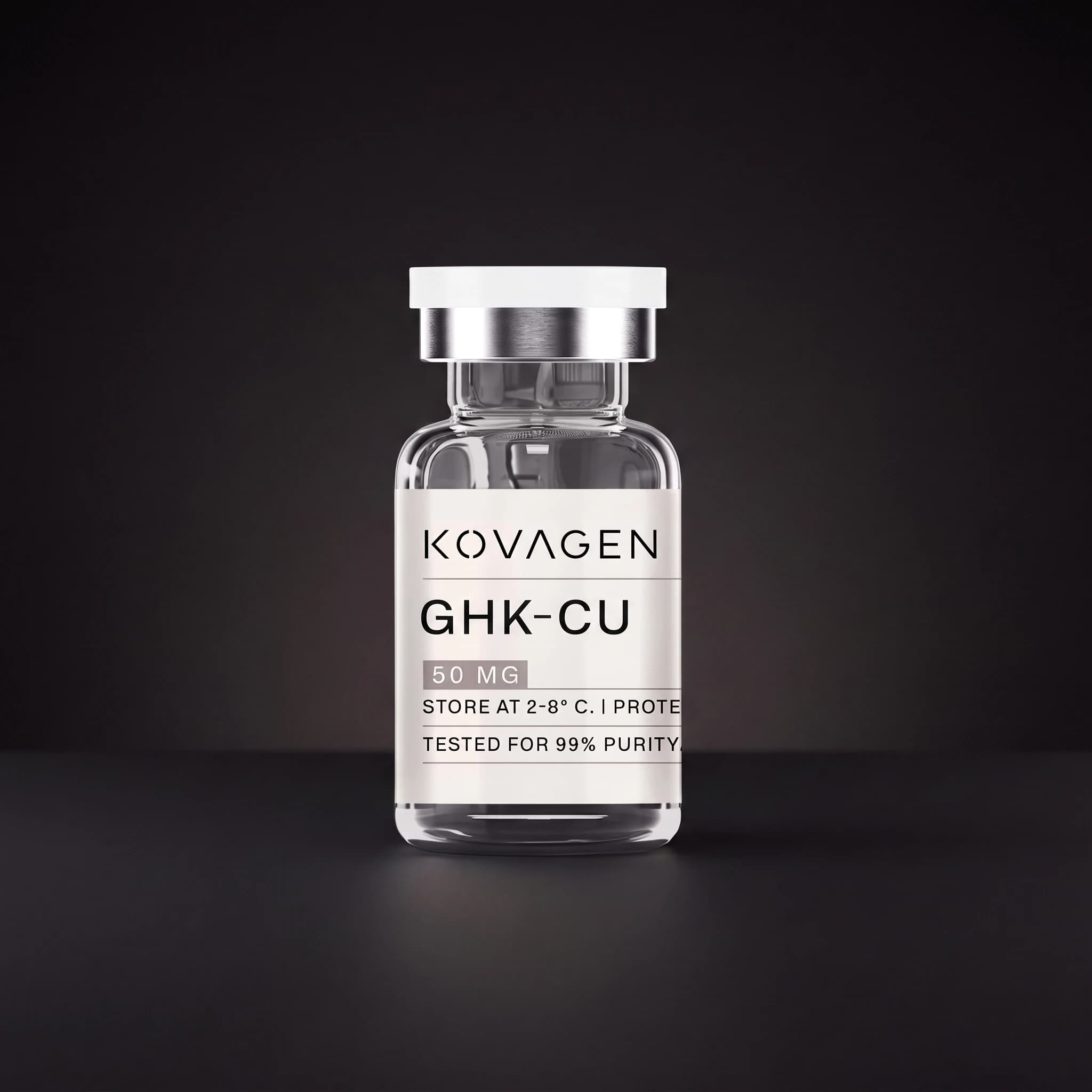
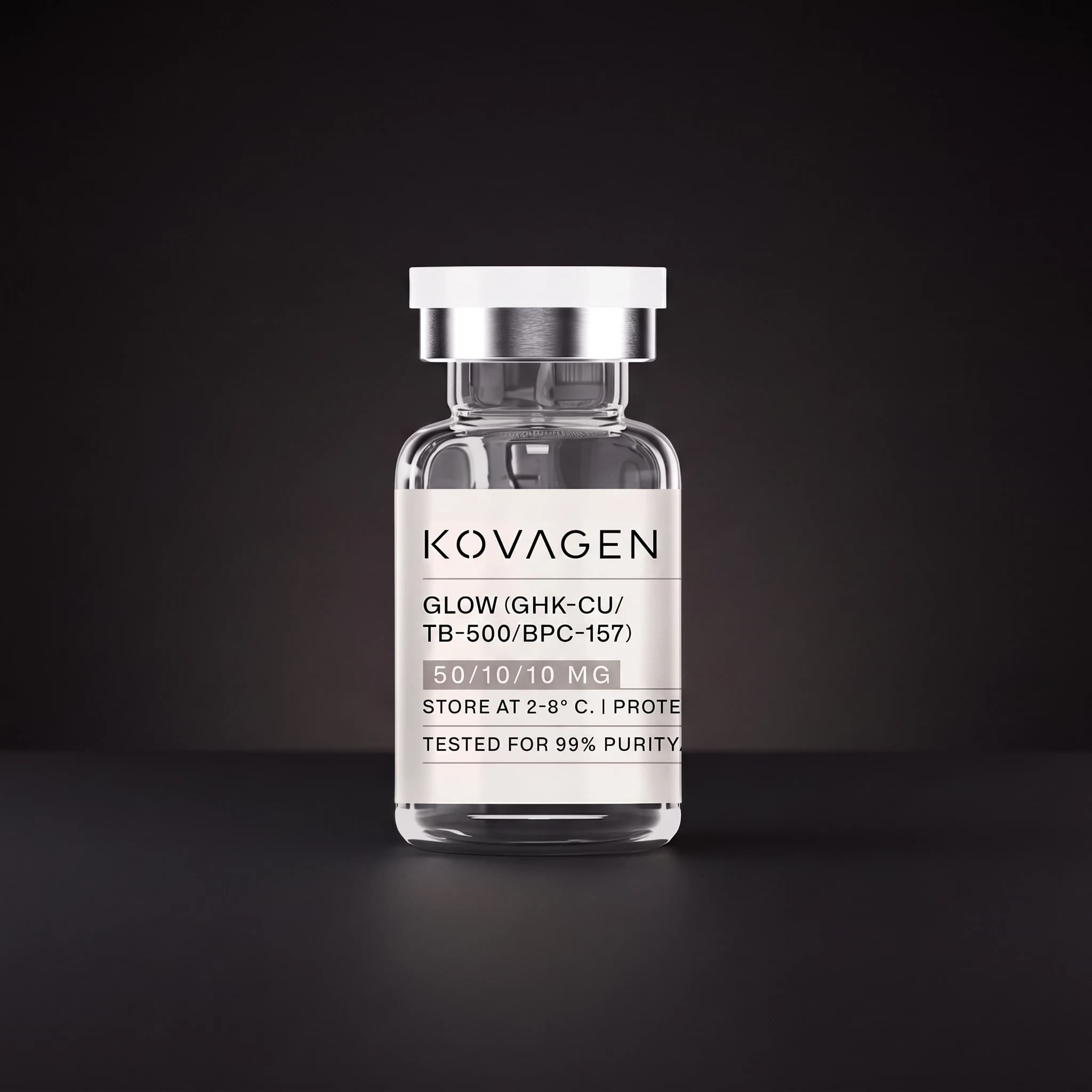
For laboratory research use only. Not for human or veterinary consumption.