Handling
Handling and storing Metabolic Blend
Two of this vial's three components are not peptides, which changes both how it is characterised and what sets its storage conditions. This page covers sealed, desiccated lyophilized powder only: how it is stored, what to inspect, and which certificate results to read. It contains no reconstitution, dosing or administration guidance for any human or animal use.
What is actually in the vial
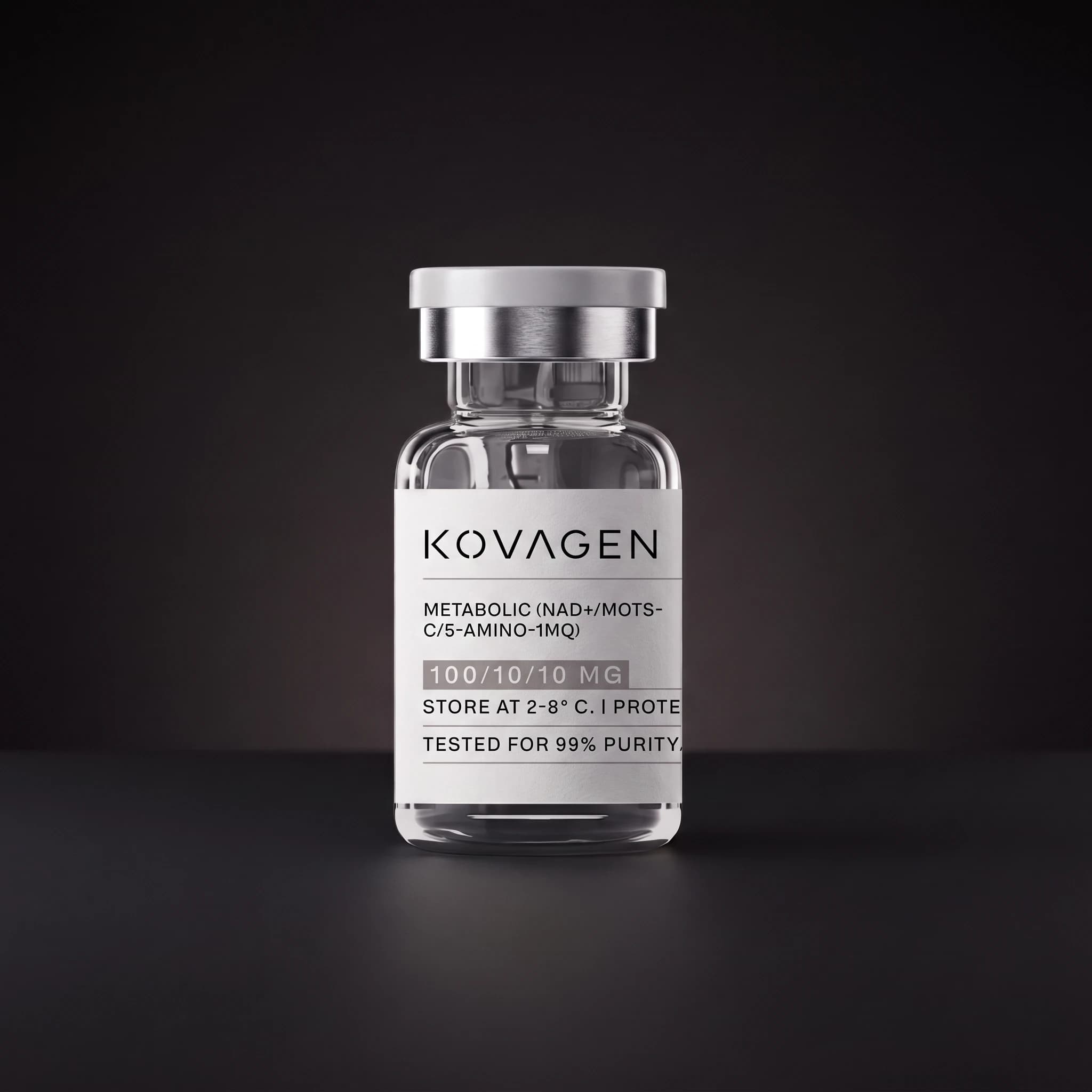
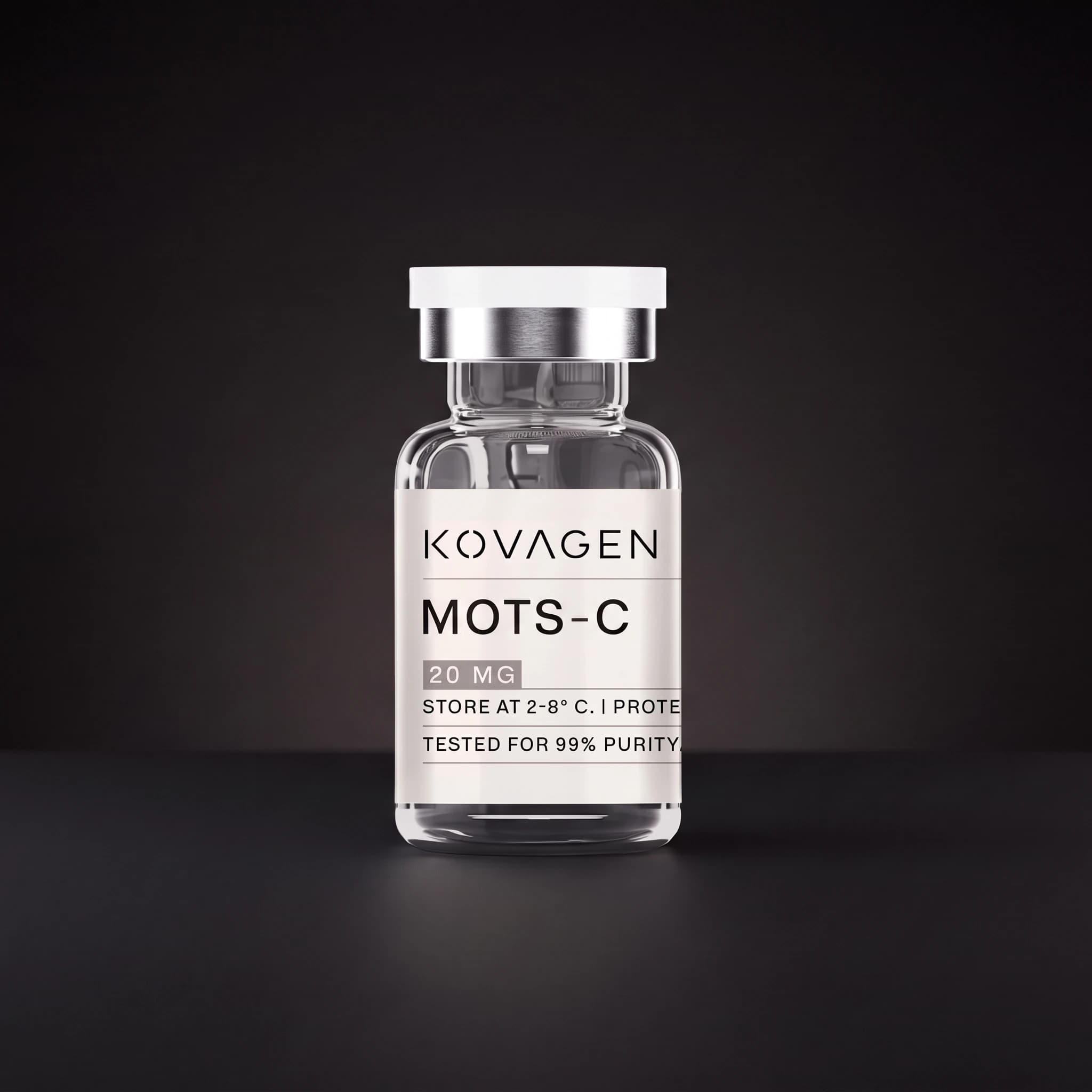
NAD+ at 100 mg is nicotinamide adenine dinucleotide, a coenzyme assembled from two nucleotides rather than from amino acids. 5-Amino-1MQ at 10 mg is a small-molecule quinolinium. MOTS-c at 10 mg is the only peptide present.
By mass, the vial is predominantly the coenzyme. Treating it as a peptide product would be a mischaracterisation of most of its contents.
The least stable component sets the rules
A blend is only as stable as its least stable component, and here that is very unlikely to be the peptide. NAD+ is well known to be appreciably less stable than a lyophilized peptide, particularly in the presence of moisture.
So the storage conditions on this batch's certificate are driven by the coenzyme rather than by MOTS-c, and the desiccant matters more for this vial than for a straightforward peptide product.
Its certificate should look different
Three components requiring three analytical approaches means a single purity percentage is not a coherent result for this vial. What is coherent is per-component identification and quantitation, each against a reference standard appropriate to the type of molecule.
If a certificate for a product like this reports one peptide purity figure, it has characterised a third of the contents and implied it characterised all of them.
Why NAD+ is the moisture-sensitive component
NAD+ is a dinucleotide, and the bond joining its two halves is a pyrophosphate linkage — a structure that hydrolyses far more readily than a peptide bond. That is the specific reason moisture is a larger concern for this vial than for a peptide-only product: the dominant component by mass has a hydrolytically labile bond at its centre, where a peptide has amide bonds that are comparatively robust in a dry solid.
The practical consequence is that the desiccant is doing more work here, and the seal is worth more attention. It is also why a vial of this blend should be brought to ambient temperature before it is opened rather than opened cold: condensation onto the solid introduces exactly the water the pyrophosphate linkage is vulnerable to.
Reading a mixed-chemistry certificate
Each of the three components needs a method suited to what it is, and the methods are not interchangeable. A peptide purity method built around reversed-phase separation with ultraviolet detection at 214 nm is appropriate for MOTS-c. NAD+ and 5-Amino-1MQ have their own absorbance characteristics and their own reference standards, and quantifying them against a peptide standard would be meaningless.
So a coherent certificate for this vial has more rows than a single-compound certificate, not fewer, and each row should carry its own method. What to look for is three identity confirmations and three quantitation results — one per named component at its stated mass.
This is the most chemically heterogeneous product in the catalogue, and its certificate is correspondingly the most involved to read. That complexity is a property of the formulation rather than a shortcoming of the testing.
What this page does not cover
Reconstitution. We do not provide dosing, administration or reconstitution guidance for human or animal use, in any channel — that is a fixed boundary rather than an omission. Everything above concerns sealed, unopened lyophilized material, which is a question we can answer.
Handling, step by step
- Keep the vial sealed and desiccated. Leave the stopper and crimp undisturbed and the desiccant in place. Moisture matters more here than for a peptide-only product, because the dominant component by mass is more moisture-sensitive.
- Store at the temperature stated on the certificate. Conditions are stated per batch and are set by the least stable component rather than by the peptide.
- Keep it in its carton. Light protection is appropriate for the nucleotide and aromatic components as well as for the peptide.
- Read the certificate for three results, not one. Look for per-component identification and quantitation. A single peptide purity figure does not describe this vial.
From the catalog
Compounds referenced on this page
For laboratory research use only. Not for human or veterinary consumption.